Technology & IT resume examples
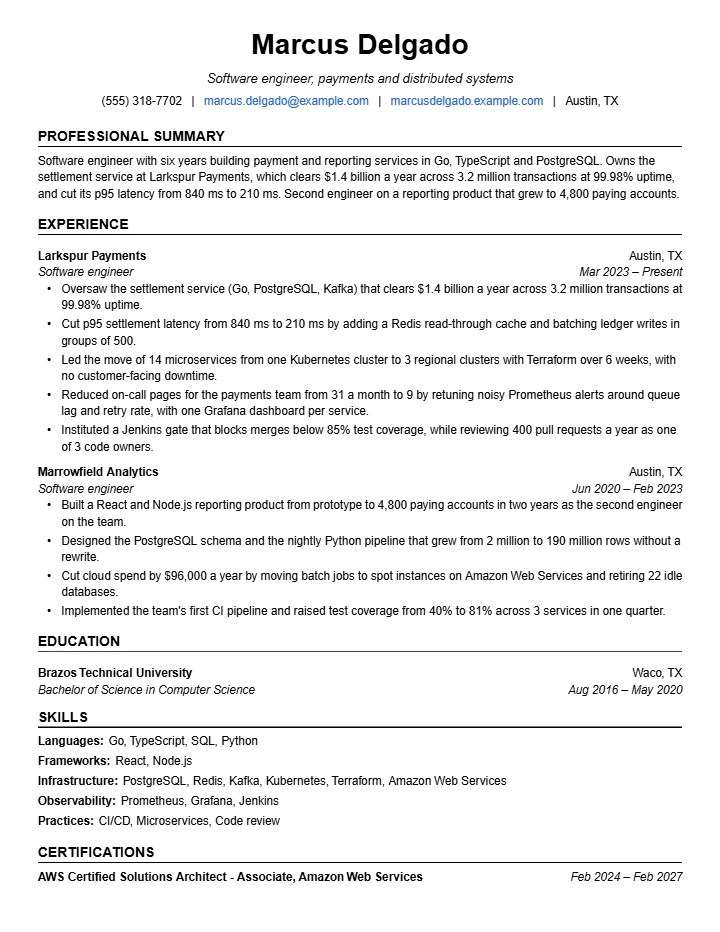
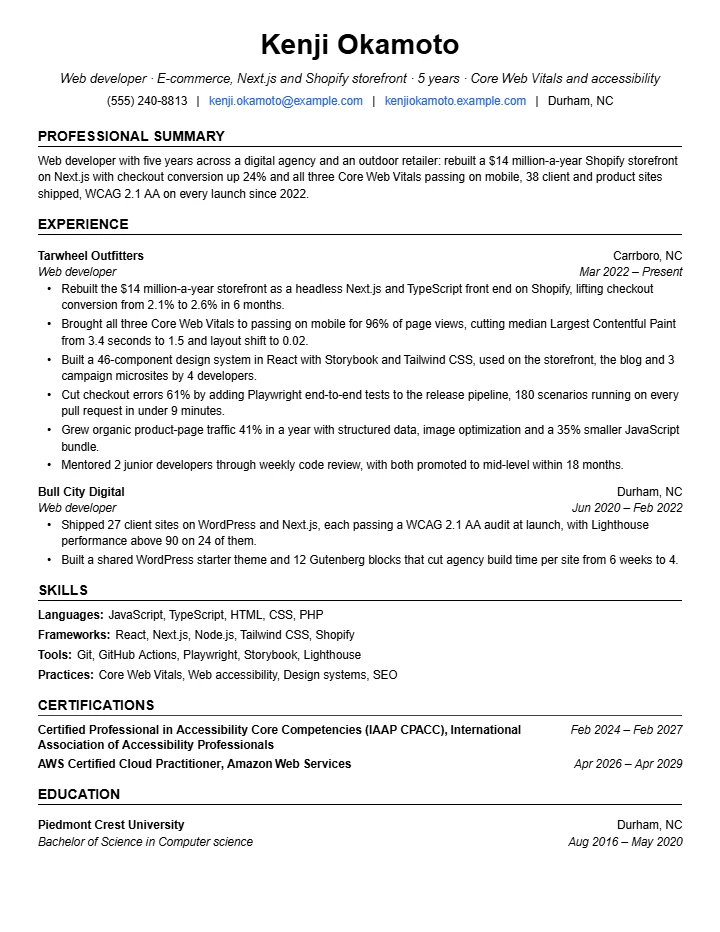
A technology resume is read twice. A recruiter checks it for the stack in the posting, and an engineering manager checks it for scope: what you built, what it ran on, and what happened after it shipped. Write for both readers. Put a short skills block near the top, grouped by kind (languages, frameworks, infrastructure, tools), and lead each group with the technologies the posting names. Then make every one of those technologies appear again inside a bullet that shows how you used it. A skill that only exists in a list reads as a keyword. A skill inside a result reads as experience.
The numbers engineers trust are system numbers. Latency, throughput, uptime, error rate, deploy frequency, build time, cloud cost, request volume, users served. A bullet that says you improved performance says nothing. A bullet that says you cut p95 latency from 840 ms to 210 ms by adding a read-through cache says what you did and proves you measured it. Where the work was not measurable, give its shape instead: the size of the codebase, the number of services, the team that depended on it.
Early in a career, a projects section carries the weight experience cannot. Link each project to a repository or a live URL, name the stack, and state what it does in one line. A GitHub or portfolio link belongs in the header next to your email. Later in a career, scope replaces projects: systems you owned, architecture decisions you made and defended, on-call rotations you ran, engineers you mentored or led.
Formatting in this field is a compatibility question. A skill-rating bar is an image to a parser, and a sidebar of tools can land above your first job in the text a recruiter searches. Keep one column, standard headings and readable type. One page covers most engineers under ten years. A second page is defensible for staff and principal roles with many systems to account for. Certifications such as AWS, Kubernetes or Security+ go last unless the posting requires one, in which case they move up under the header.
2 titles
Questions about technology & IT resumes
Should a technology resume list every language and framework I have ever used?
No. List what you would be comfortable being interviewed on this week. Group the list by kind, put the posting's stack first in each group, and drop anything you last touched years ago unless the posting asks for it. A long undifferentiated list tells a hiring manager you cannot tell what matters, and it dilutes the technologies you actually know.
Do IT and software resumes need a summary paragraph?
Yes, and keep it to three lines that a screener can test. Line one is the role and the years. Line two is the core stack and one specialty, for example Go and Postgres on Kubernetes for payment systems. Line three is one system-scale number: transactions a year, requests a second, uptime. A manager reads it in three seconds and knows whether to keep going. Anything the three lines cannot carry belongs in a bullet with its own number.
How do I describe work that is under an NDA or inside a private codebase?
Name the category of product and the industry, not the customer: a payments API for a named bank becomes a payments API for a regional bank. Keep the numbers, the stack and your own part of the work, because those are yours to tell. Say in the interview that the client is under an agreement. Engineering managers hear it every week and will steer to what you can share.
Free to start
Build your resume
No card, no trial that turns into a charge.