Healthcare & medical resume examples
Healthcare resumes are read credentials first. The license type, the state, and the expiry date belong in the header, followed by BLS, ACLS, PALS or NRP as the unit requires, specialty credentials such as CCRN, or the equivalents for allied roles. After your name, the credentials go in a fixed order: degree, license, certifications. A nurse manager or a clinical recruiter checks these before reading a single bullet, because a missing or lapsed credential ends the application no matter what the experience says.
Every role needs its clinical setting spelled out. The facility type (a Level I trauma center, a 300-bed community hospital, an outpatient clinic, a skilled nursing facility), the unit (ICU, med-surg, emergency, labor and delivery, oncology), the patient population, the nurse-to-patient ratio, and the electronic health record you charted in, whether Epic, Cerner, Meditech or another system. These details tell the reader what you have actually handled, and they are what a hiring manager compares against the open position.
Bullets carry clinical numbers. Patients per shift. Ratios. Protocol compliance rates. Falls, infections or readmissions reduced on your unit. Patient-experience scores. Medication error rates. Charting turnaround. Precepting counts for new hires. Where a metric is the unit's rather than yours, say so and state your part in it. Clinical readers can tell an individual result from a unit result, and they respect the distinction. Charge shifts, float assignments and committee work belong here too, each with the units covered or the cadence of the meetings.
One plain column with standard headings, and one page for anyone under about ten years of practice. Education comes with clinical rotations for new graduates and drops to the degree line afterwards. A licenses and certifications section sits near the top, not the bottom, with an expiry date on every line. Nothing decorative belongs on a page whose reader is checking for expiry dates.
11 titles
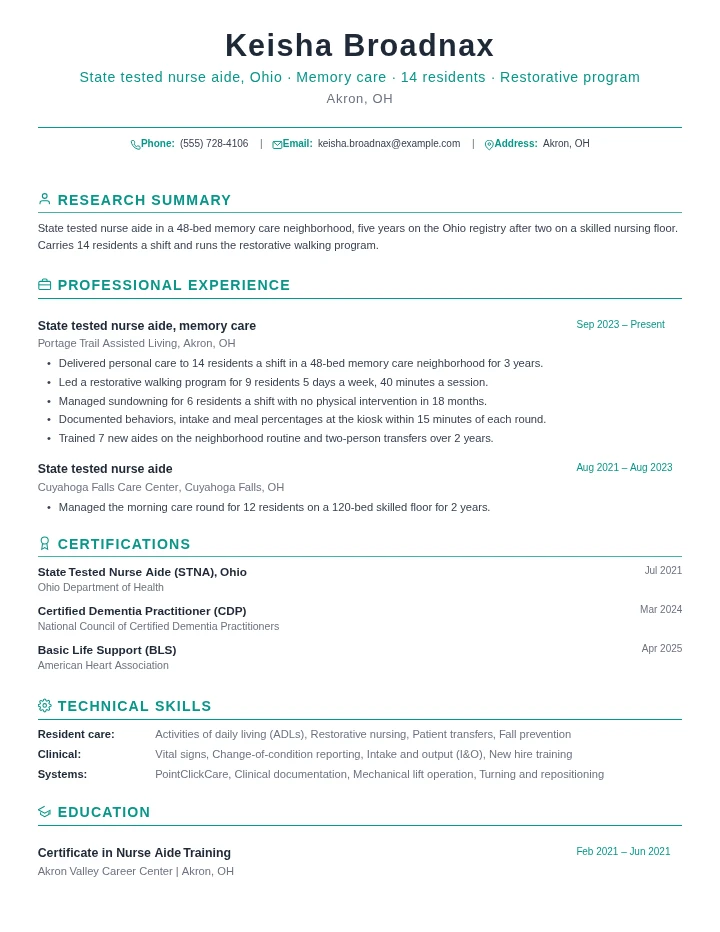
Certified nursing assistant
Entry, mid and senior
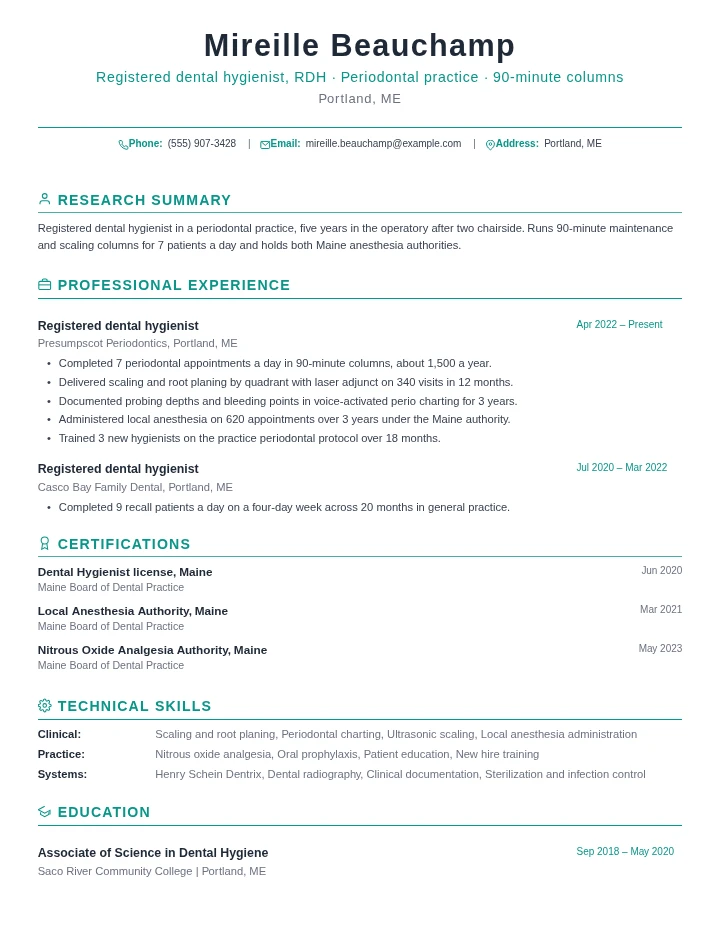
Dental hygienist
Entry, mid and senior
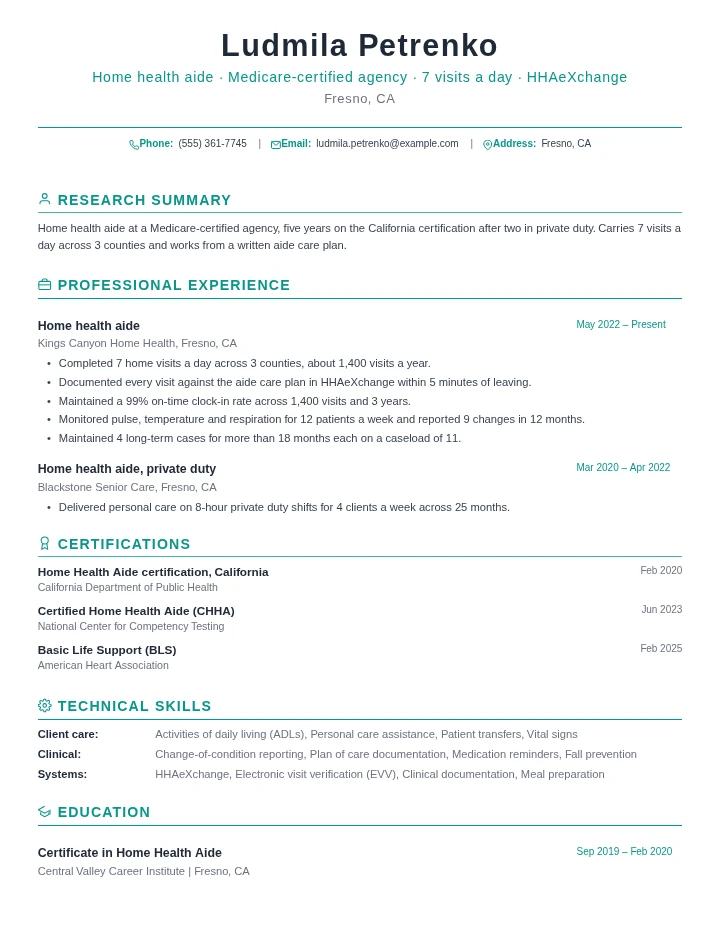
Home health aide
Entry, mid and senior
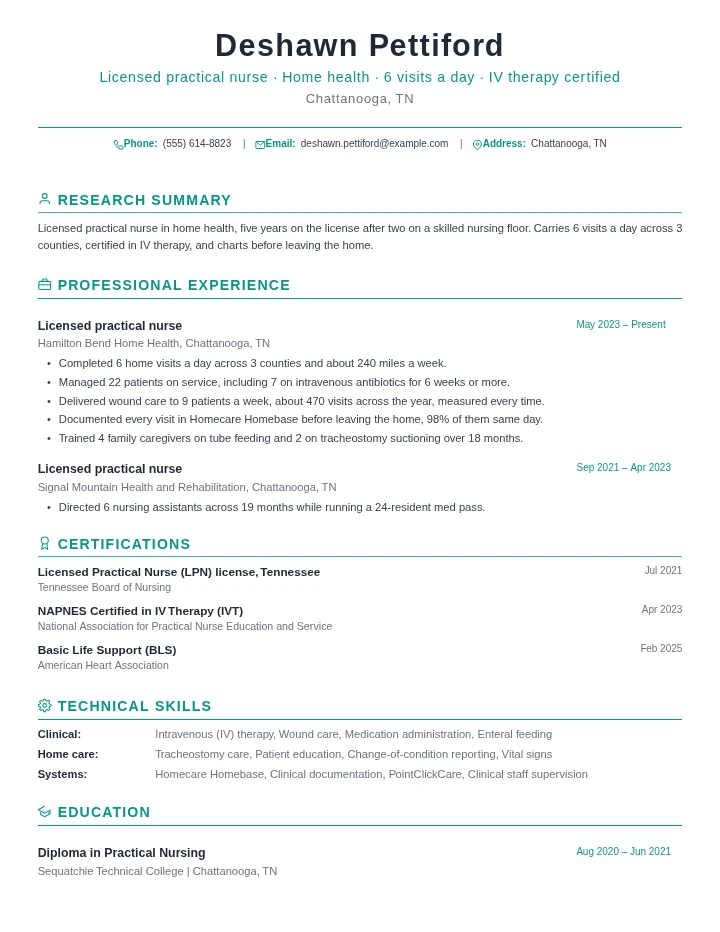
Licensed practical nurse
Entry, mid and senior
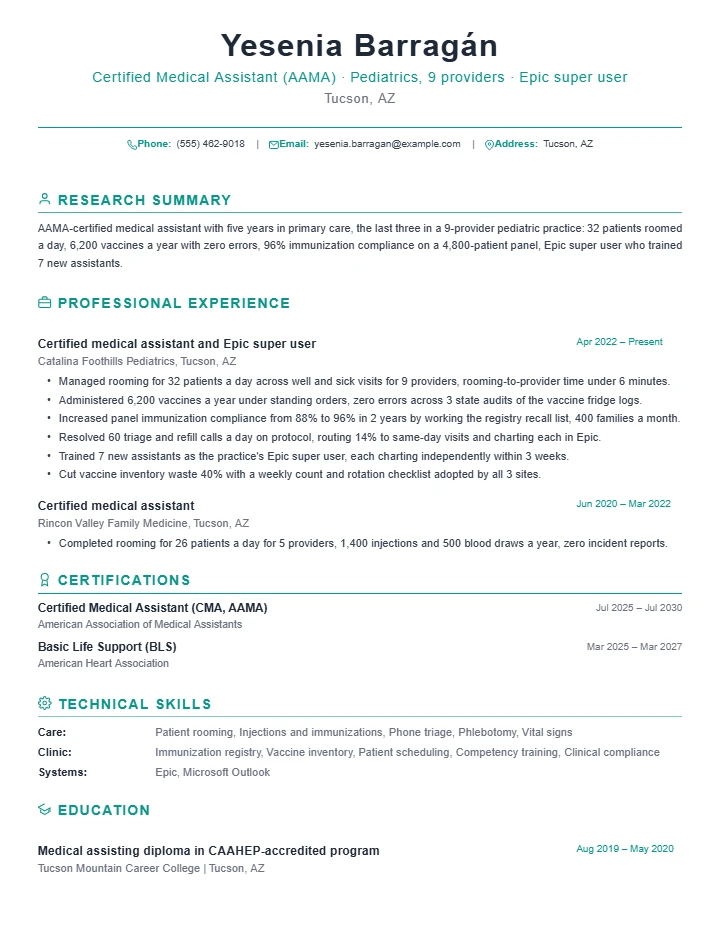
Medical assistant
Entry, mid and senior
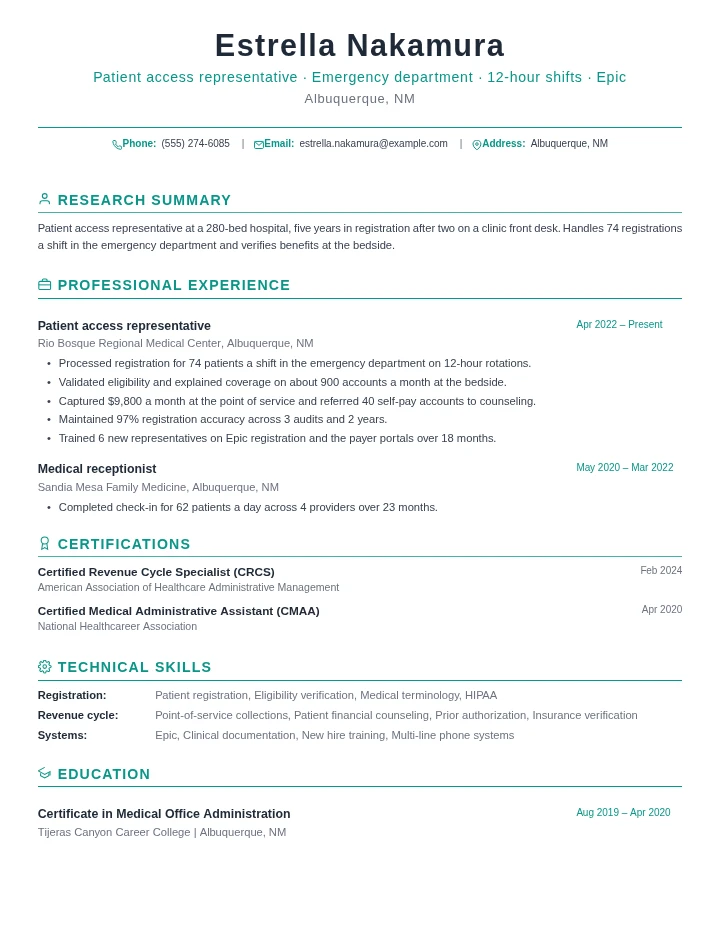
Medical receptionist
Entry, mid and senior
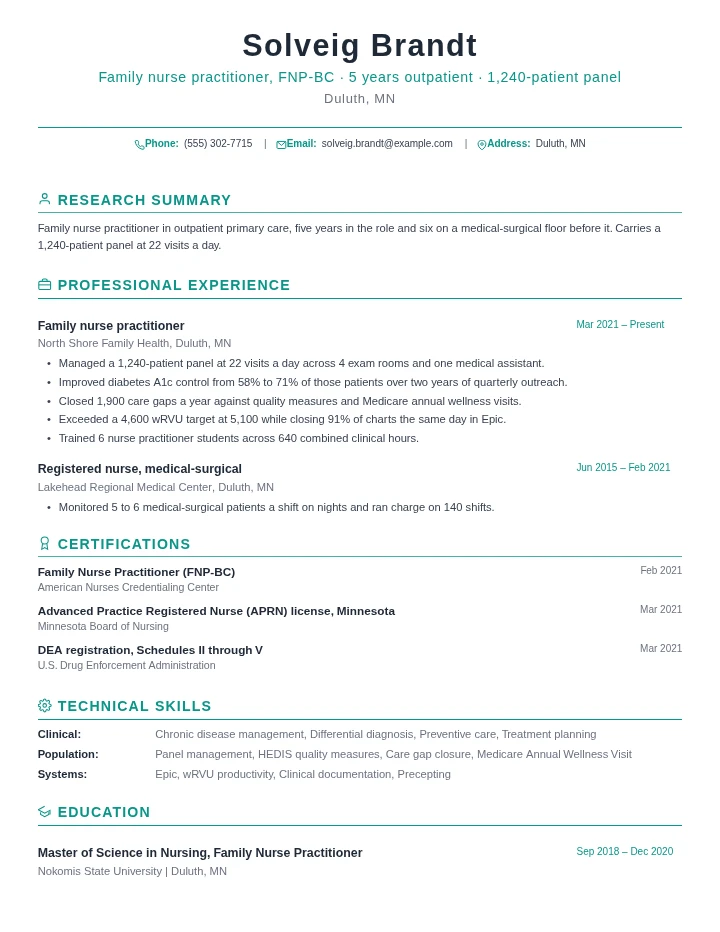
Nurse practitioner
Entry, mid and senior
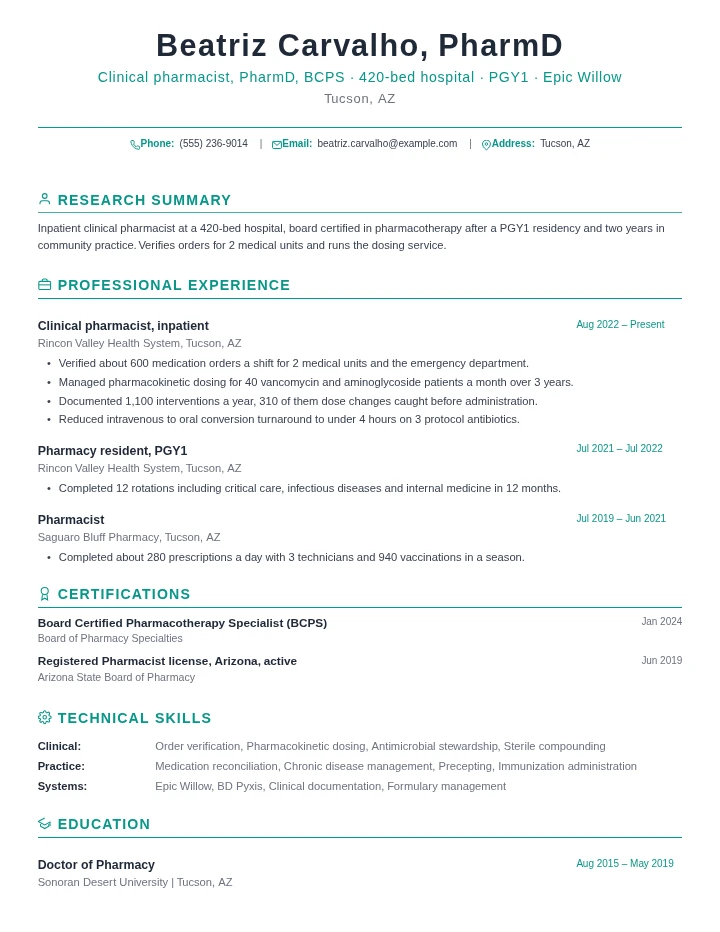
Pharmacist
Entry, mid and senior
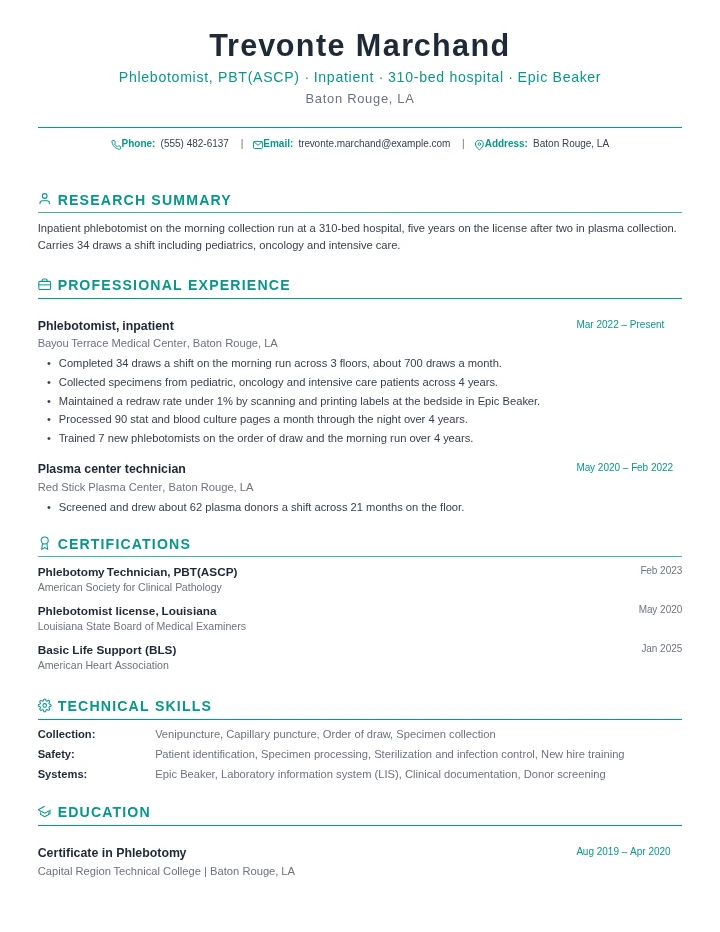
Phlebotomist
Entry, mid and senior
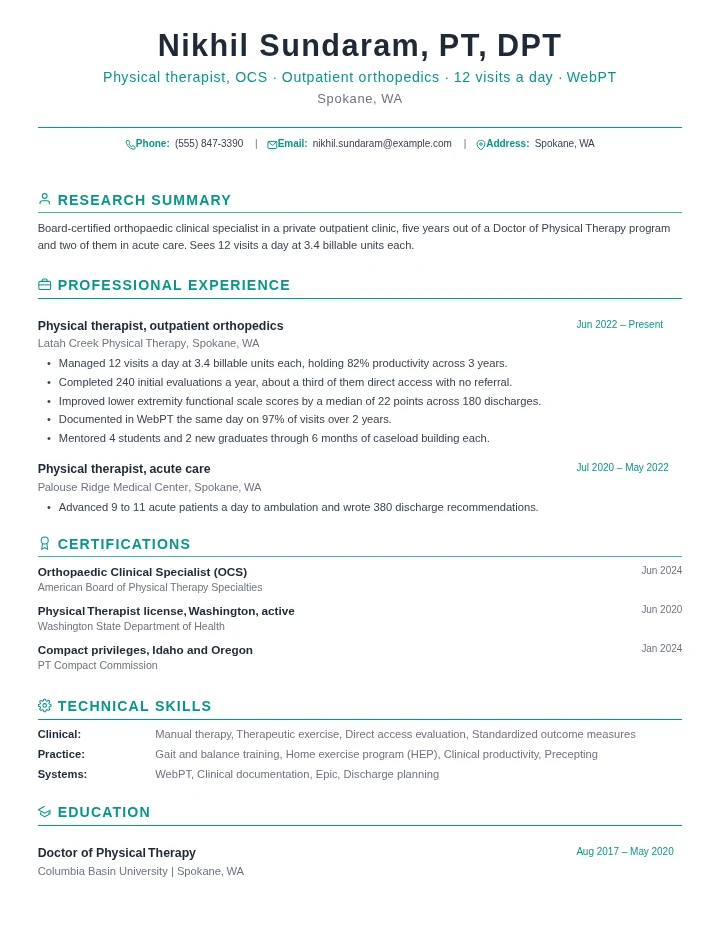
Physical therapist
Entry, mid and senior
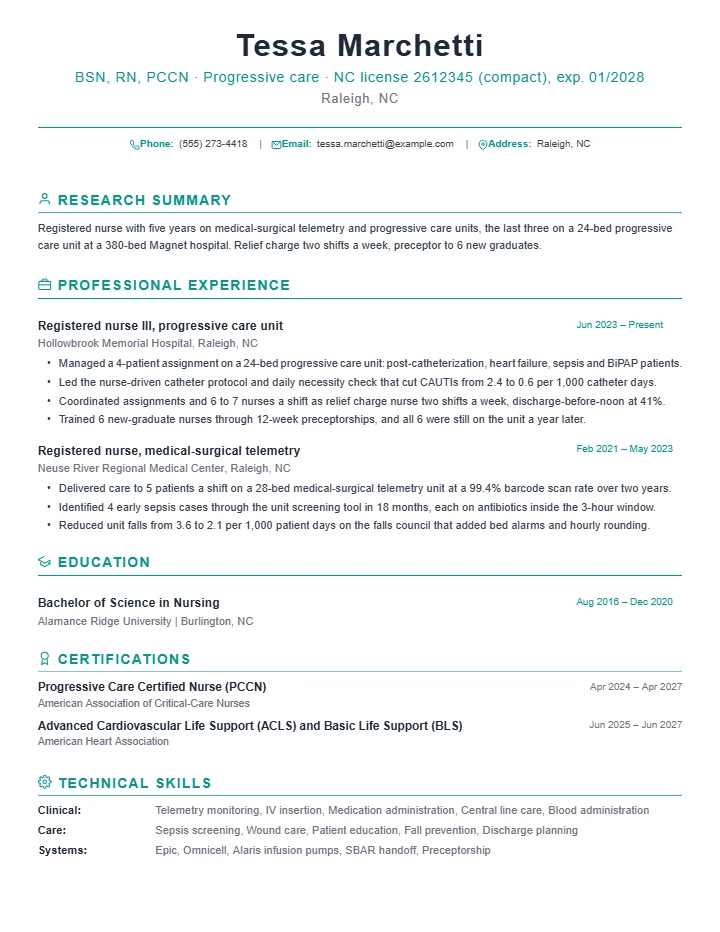
Registered nurse
Entry, mid and senior
Questions about healthcare & medical resumes
Should I include my license number on a nursing or allied health resume?
Include the license type, the state and the expiry date. The number is optional and many candidates leave it for the application form, where the employer verifies it. If a posting asks for the number, add it. What must never be missing is the state and the current status.
How does a new graduate nurse show experience?
Clinical rotations are experience. List each with the facility type, the unit, the hours and one specific responsibility or procedure. Add a capstone or preceptorship with its unit and patient load, then certifications and any work as a nursing assistant or technician. Employers hiring new graduates expect this shape and read it as readiness.
Do healthcare resumes need a summary?
Yes, as two or three lines a nurse manager can check against the posting, not a paragraph. Line one is the role, the unit and the years: registered nurse, ICU, four years. Line two is the facility type and the ratio: Level I trauma center, 1:2. A third line can carry one unit number, such as a fall rate or a precepting count. A long summary in this field tends to repeat the credentials that are already in the header, so keep every line to something new.
Free to start
Build your resume
No card, no trial that turns into a charge.