Design & creative resume examples
A design resume has one job: to get the portfolio opened. The link goes in the header, and one specific case study gets named in the first lines so the reader knows where to click. Everything else on the page supports that click. Creative directors and design leads make the first decision from the portfolio, but the resume is what a recruiter reads before it reaches them, so it has to parse, name the right tools, and show the scope of what you have shipped.
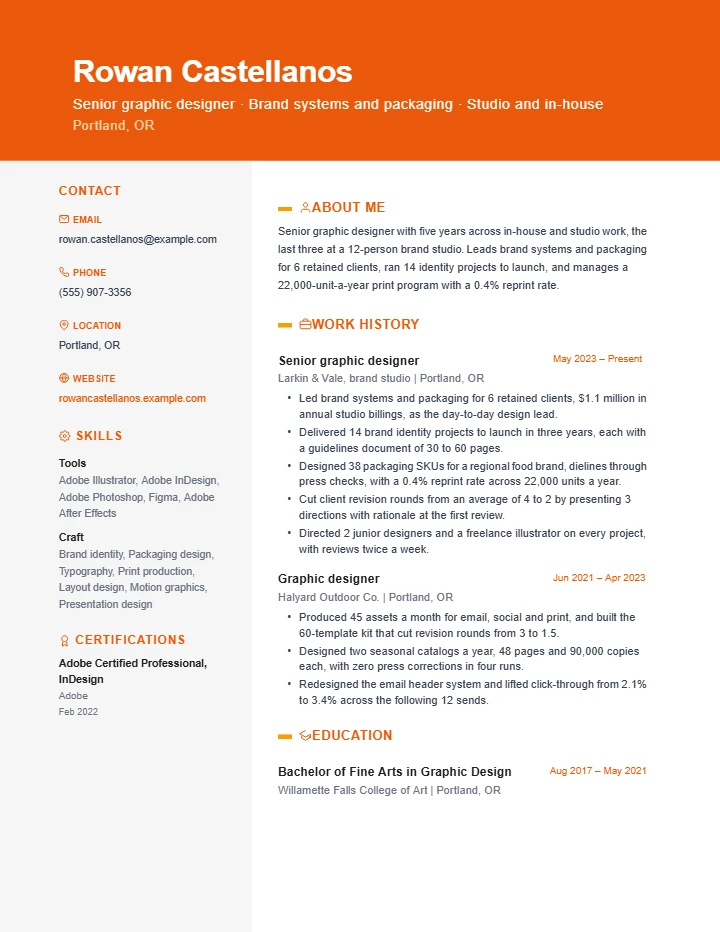
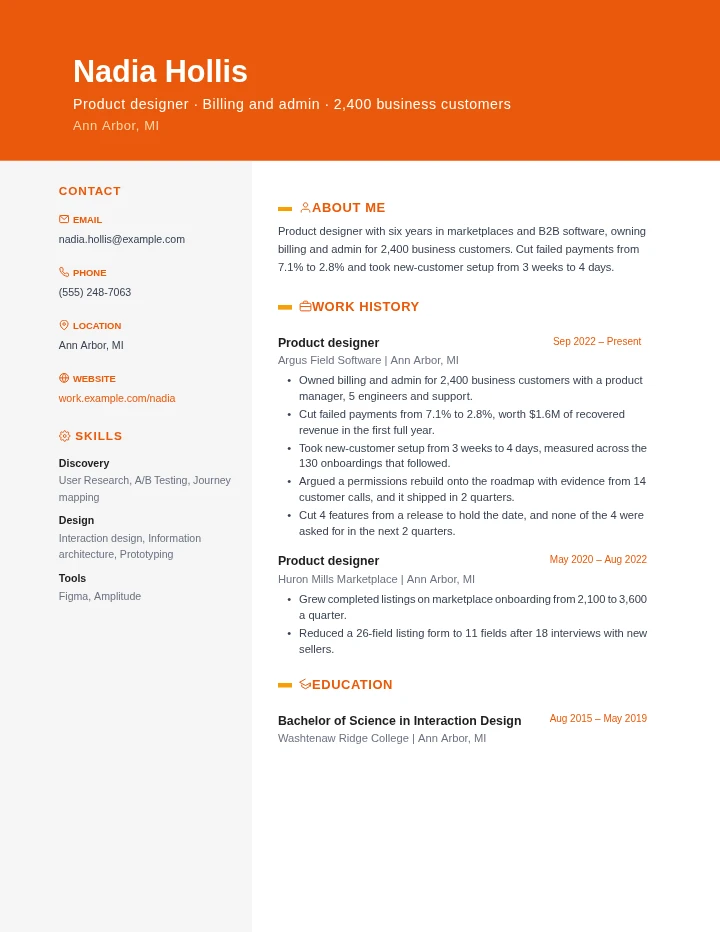
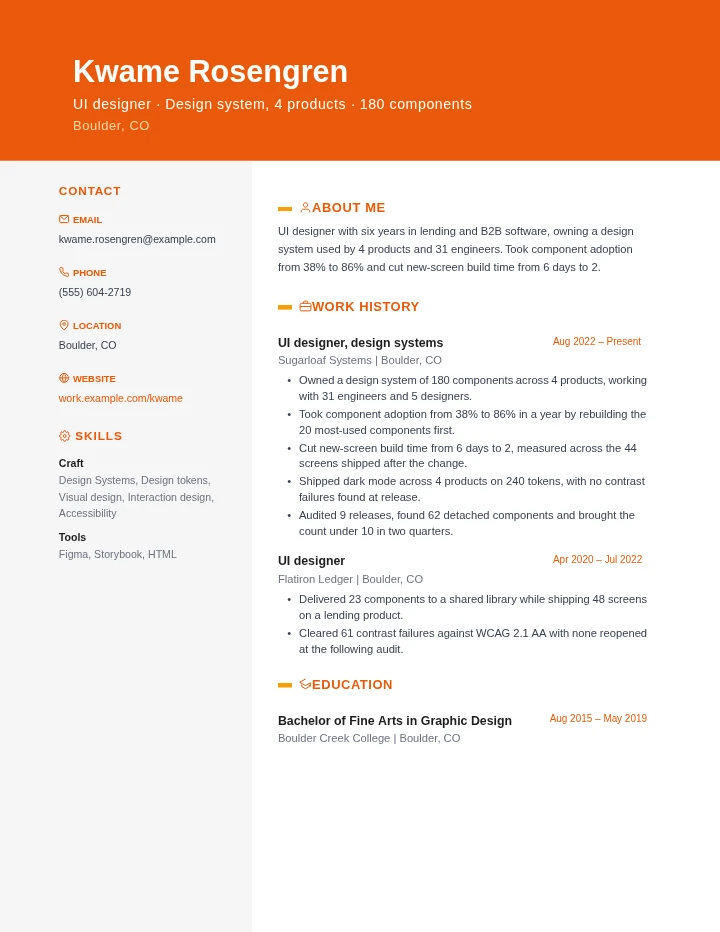
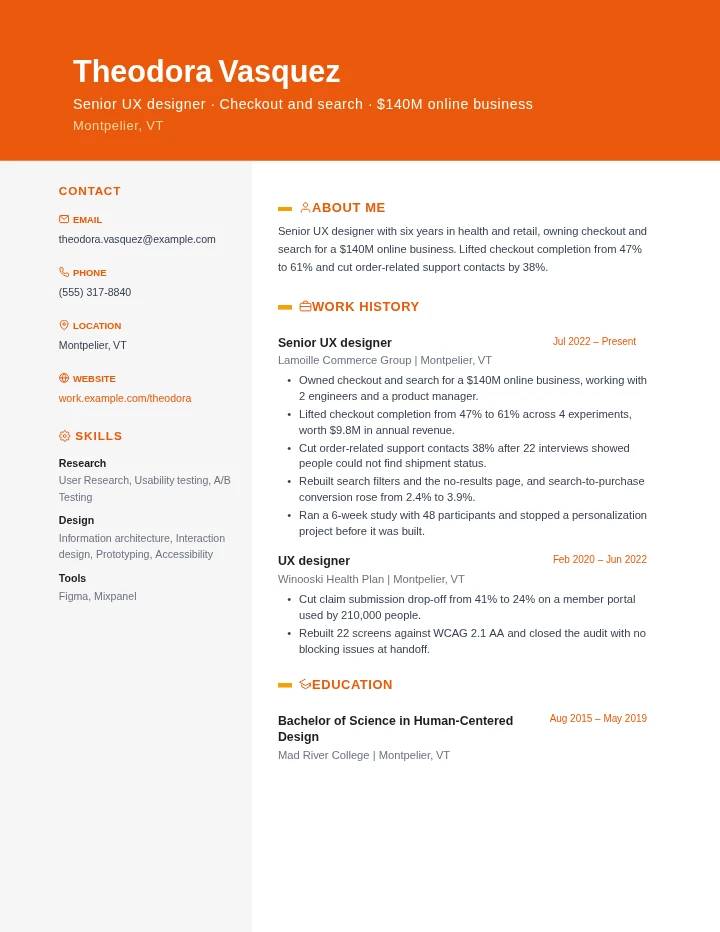
Name tools by their real names. Figma, Sketch, Adobe Illustrator, Photoshop, InDesign, After Effects, Premiere, Blender, Webflow, Framer, and whatever prototyping and handoff tools your teams used. Pair each with what it produced: a design system with a component count, a brand identity with the deliverables it covered, a print run and its size, a campaign and where it ran. Process words such as research, wireframing and usability testing matter for product roles. State how many sessions and what the tests changed.
Creative work has numbers, and the resume should carry them wherever they exist. Conversion rate after a redesign, engagement on a campaign, task completion in usability testing, time on task, sign-ups, revenue attributed to a launch. Where a number does not exist, scope stands in: the brands, products, screens, markets and teams the work covered. An outcome plus a scope tells a hiring manager you understand what the work was for.
The resume can carry a designer's taste, but it is not a portfolio piece. Keep text as text, not as part of an image, so the parser can read it. Keep the hierarchy clear, the type consistent, and the layout a single column or a simple two-column split with the content in the main column. A resume that is beautiful and unreadable to an applicant tracking system is a resume the recruiter's software cannot search.
4 titles
Questions about design & creative resumes
Should a graphic designer or UX designer send a designed resume?
Send a resume that shows judgment: a clear hierarchy, consistent type, comfortable spacing, one accent used with restraint. That is design. Heavy decoration, icons for every section and text set inside images read as a portfolio piece in the wrong place and often fail to parse. Put the ambitious work in the portfolio, where a reader expects it.
How do I show work on products I cannot name because of an NDA?
Describe the product category, your role, the constraints and the outcome, and leave out the name. In the portfolio, password-protect the case study and mention that in the resume line. Hiring managers in this field see this often and will ask for a walkthrough.
Do I list soft skills such as collaboration and communication?
Show them instead. A bullet that says you ran weekly critiques for a team of eight, or presented concepts to a client and shipped the chosen direction, demonstrates collaboration. A list of adjectives does not, and it takes space from tools and outcomes that get you the interview.
Free to start
Build your resume
No card, no trial that turns into a charge.