Investment banking analyst resume examples & writing guide for 2026

Three investment banking resumes at analyst, associate and vice president level, rendered in a real template and annotated note by note. Every one describes deals by type, sector and size, says what the banker did on them and names the licenses.

By the Resumi editorial teamUpdated 8 min read

Showing the mid-level example

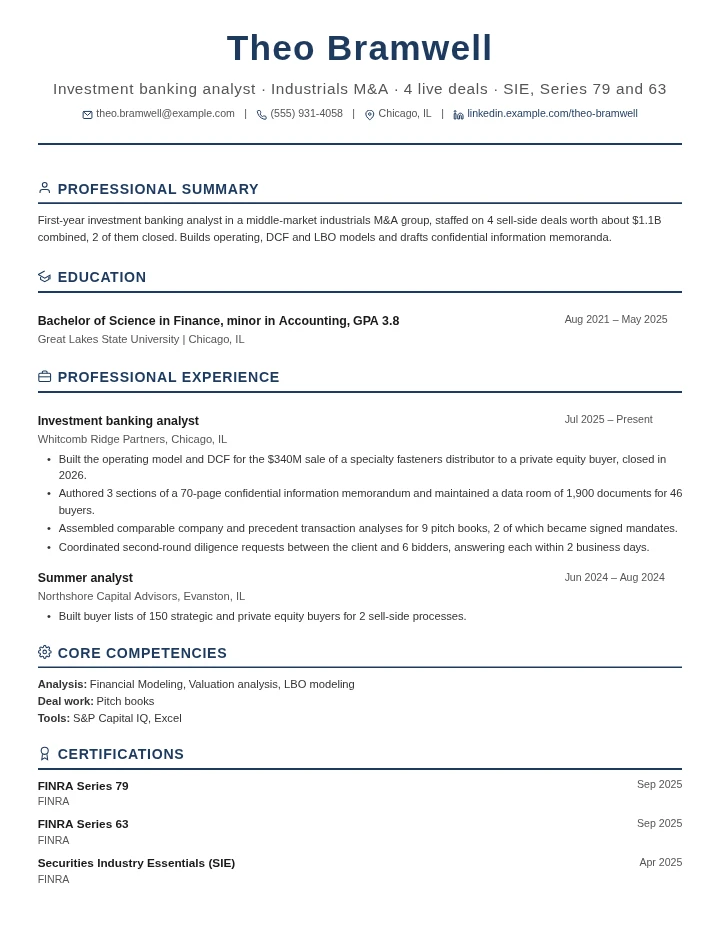
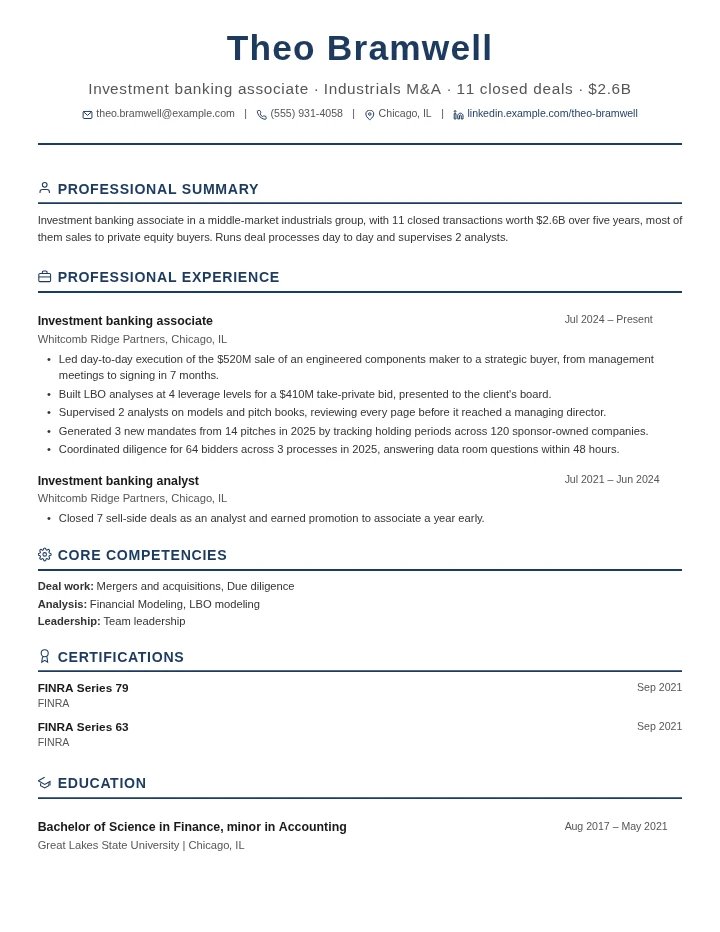
Investment banking analyst resume example, mid level, rendered in the Executive Classic template
Strength: Strong

Written by the Resumi editorial team for a fictional candidate. Role facts come from O*NET and the U.S. Bureau of Labor Statistics.

Strength band is Resumi’s optimization score, not a ranking any employer sees.

What makes this resume work

Each marker on the page has a note here. Press a marker to jump to its note.

  1. 1

    Closed deals and total value

    Eleven closed deals worth $2.6B. Closed counts carry more weight than deals worked, and the total gives a hiring bank the scale of transactions this associate knows.

  2. 2

    Process ownership stated

    Runs deal processes day to day and supervises 2 analysts. The jump from analyst to associate is from building pages to running a process, and the summary says it plainly.

  3. 3

    A deal from start to signing

    A $520M sale, from management meetings to signing in 7 months. The timeline shows which stages the associate ran, which is the first question in an associate interview.

  4. 4

    Review before a director sees it

    Every page reviewed before it reached a managing director. Quality control is the associate's job, and the bullet says so without claiming credit for the analysts' work.

  5. 5

    Diligence at scale

    Sixty-four bidders across 3 processes, questions answered within 48 hours. A fast, organized data room keeps bidders in a process, and the count shows the load carried.

01The example, in full

The resume shown above, as text you can search and copy.

Theo Bramwell

Investment banking associate · Industrials M&A · 11 closed deals · $2.6B

Chicago, ILtheo.bramwell@example.com(555) 931-4058linkedin.example.com/theo-bramwell

Summary

Investment banking associate in a middle-market industrials group, with 11 closed transactions worth $2.6B over five years, most of them sales to private equity buyers. Runs deal processes day to day and supervises 2 analysts.

Experience

Investment banking associate

Jul 2024 – Present

Whitcomb Ridge Partners · Chicago, IL

  • Led day-to-day execution of the $520M sale of an engineered components maker to a strategic buyer, from management meetings to signing in 7 months.
  • Built LBO analyses at 4 leverage levels for a $410M take-private bid, presented to the client's board.
  • Supervised 2 analysts on models and pitch books, reviewing every page before it reached a managing director.
  • Generated 3 new mandates from 14 pitches in 2025 by tracking holding periods across 120 sponsor-owned companies.
  • Coordinated diligence for 64 bidders across 3 processes in 2025, answering data room questions within 48 hours.

Investment banking analyst

Jul 2021 – Jun 2024

Whitcomb Ridge Partners · Chicago, IL

  • Closed 7 sell-side deals as an analyst and earned promotion to associate a year early.

Education

Bachelor of Science in Finance, minor in Accounting

Aug 2017 – May 2021

Great Lakes State University · Chicago, IL

Skills

Deal work
Mergers and acquisitions, Due diligence
Analysis
Financial Modeling, LBO modeling
Leadership
Team leadership

Certifications

FINRA Series 79

Sep 2021

FINRA

FINRA Series 63

Sep 2021

FINRA

02Market snapshot

Median pay
$102,740 median annual pay for financial and investment analysts, $124,370 at securities firms
Typical education
Bachelor's degree, with no prior work experience required
Job outlook
7% growth from 2025 to 2035, about 29,500 openings a year
Common credentials
FINRA licenses usually need employer sponsorship, so they come after hire

Sources: BLS OES (May 2025) · BLS OOH (2025)

03The same resume at three levels

The tinted row is the level shown above.

  • Entry-level

    0–2 years

    Education sits above the jobs with the GPA, as analyst resumes usually show. Bullets give one deal in full, the information memorandum and data room, pitch books that became mandates and second-round diligence with a deadline. The internship folds to one line with buyer lists.

    Typical titles: Investment banking analyst, M&A analyst, Corporate finance analyst

  • Mid-level

    3–6 years

    The headline moves from live deals to closed deals and total value. Bullets give a deal from management meetings to signing, LBO work for a board, analyst supervision, mandates won from sponsor tracking and diligence for many bidders. The analyst years fold to one line with an early promotion.

    Typical titles: Investment banking associate, M&A associate, Senior analyst, investment banking

  • Senior

    7+ years

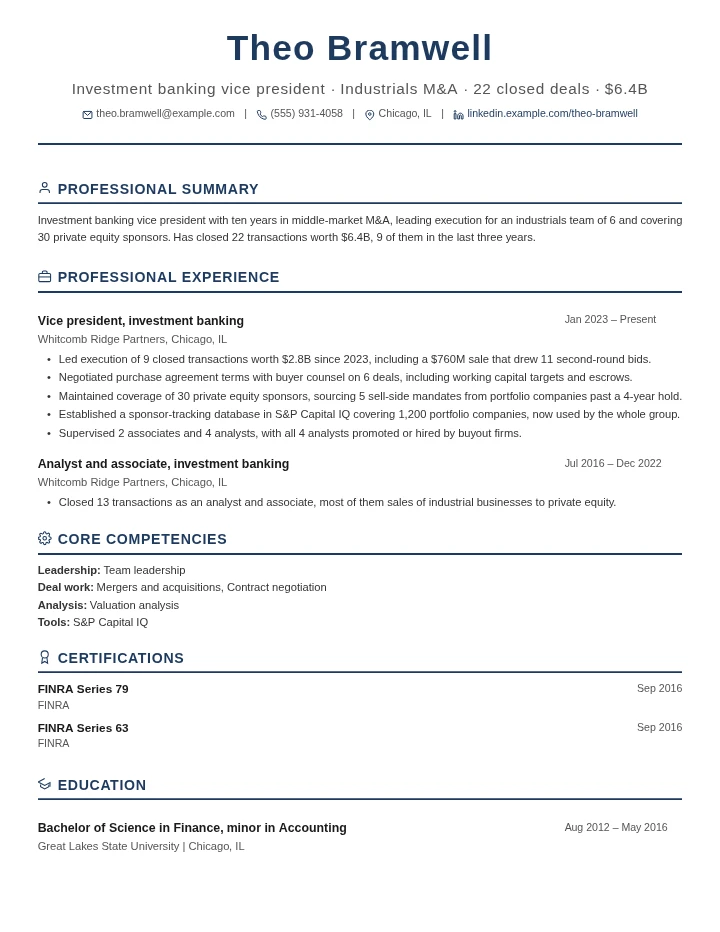
    Scope replaces modeling: recent closed deals with bid counts, purchase agreement terms negotiated, sponsor coverage and mandates sourced, a tracking database the group uses and a team of associates and analysts. The earlier analyst and associate years fold to one line with a deal count.

    Typical titles: Vice president, investment banking, Director, M&A, Senior associate, investment banking

04Summary

Weak

Highly motivated finance professional with strong analytical and modeling skills, eager to contribute to a fast-paced investment banking team and add value on complex transactions.

Strong

Investment banking associate in a middle-market industrials group, with 11 closed transactions worth $2.6B over five years, most of them sales to private equity buyers. Runs deal processes day to day and supervises 2 analysts.

The group, the closed deal count, the value, the buyer type and the scope of the role. A hiring bank can see what this associate has done and at what size in one read. The weak version adds value on complex transactions without naming one.

05Bullets

Weak

  • Assisted with financial modeling and pitch book preparation for various M&A transactions across multiple industries.

Strong

  • Led day-to-day execution of the $520M sale of an engineered components maker to a strategic buyer, from management meetings to signing in 7 months.

A deal type, sector, size and buyer, the stages run and the time to signing. An interviewer can walk through it step by step and test each stage. The weak bullet names no deal, no role and no result, so it could describe any banker in any group at any bank.

06Skills and keywords

Analysis

  • Financial Modeling (in the example)
  • LBO modeling (in the example)
  • Valuation analysis
  • Financial Analysis

Deal work

  • Mergers and acquisitions (in the example)
  • Due diligence (in the example)
  • Pitch books (in the example)
  • Confidential information memorandum

Tools and licenses

  • S&P Capital IQ
  • Excel
  • FINRA Series 79 (in the example)
  • FINRA Series 63 (in the example)

Filled chips appear in the example above.

Paste a job description and Resumi shows which of these your resume already covers.

Build your investment banking analyst resume

07Mistakes to avoid

  1. Client names on unannounced deals

    Fix: Describe live or unannounced deals by type, sector and approximate size, such as the $340M sale of a fasteners distributor. Naming a client before the deal is public breaks confidentiality, and an interviewer will notice.

  2. Too many deals, too little detail

    Fix: Pick two or three deals you know well and give each one the type, size, buyer and your work on it. A long list of deals you cannot discuss in detail invites questions you will struggle to answer.

  3. Claiming credit for pricing

    Fix: Analysts build the models that support a decision, and managing directors and clients make it. Say what you built and who used it, such as a model presented to a board, rather than claiming you set the price.

  4. Licenses missing or vague

    Fix: List the SIE, Series 79 and Series 63 by name with the year passed. Many banks sponsor these after hire and expect them within months, so a candidate who already holds them saves the bank time.

  5. Education buried as an analyst

    Fix: Analyst resumes usually lead with education, GPA and relevant coursework, then deals. After two or three years, move education to the bottom and let closed deals and process work lead the page.

08Format and template

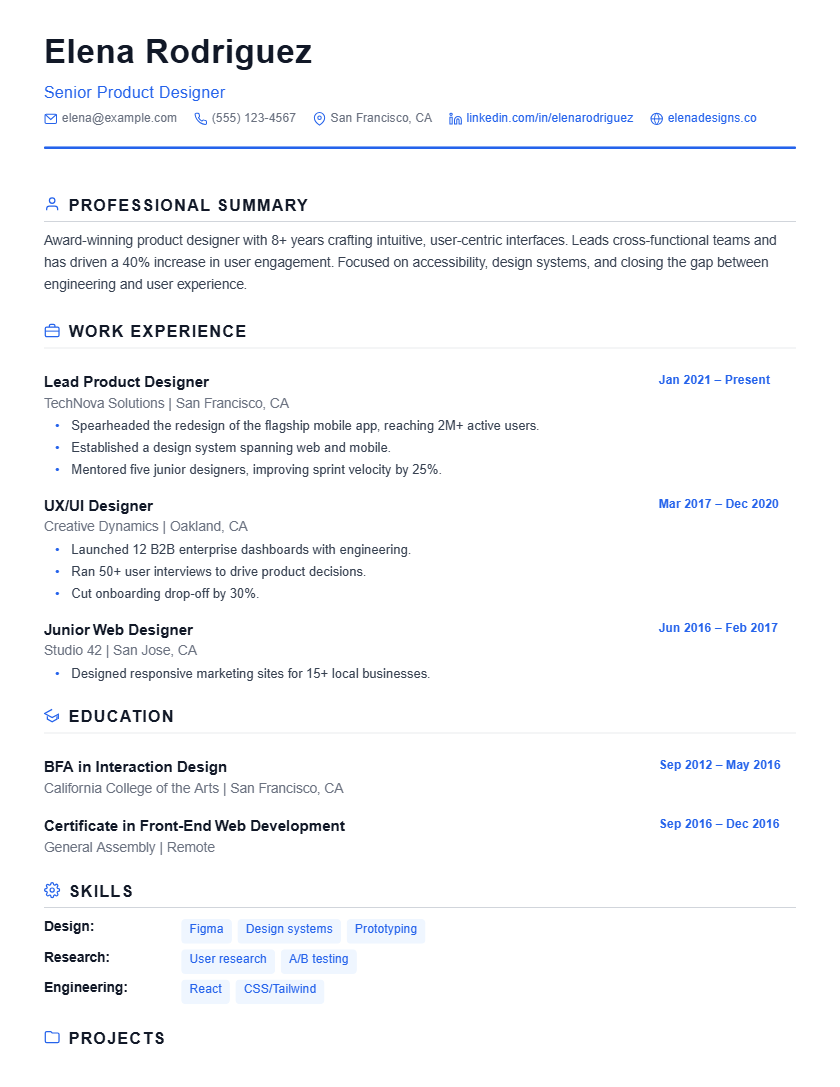
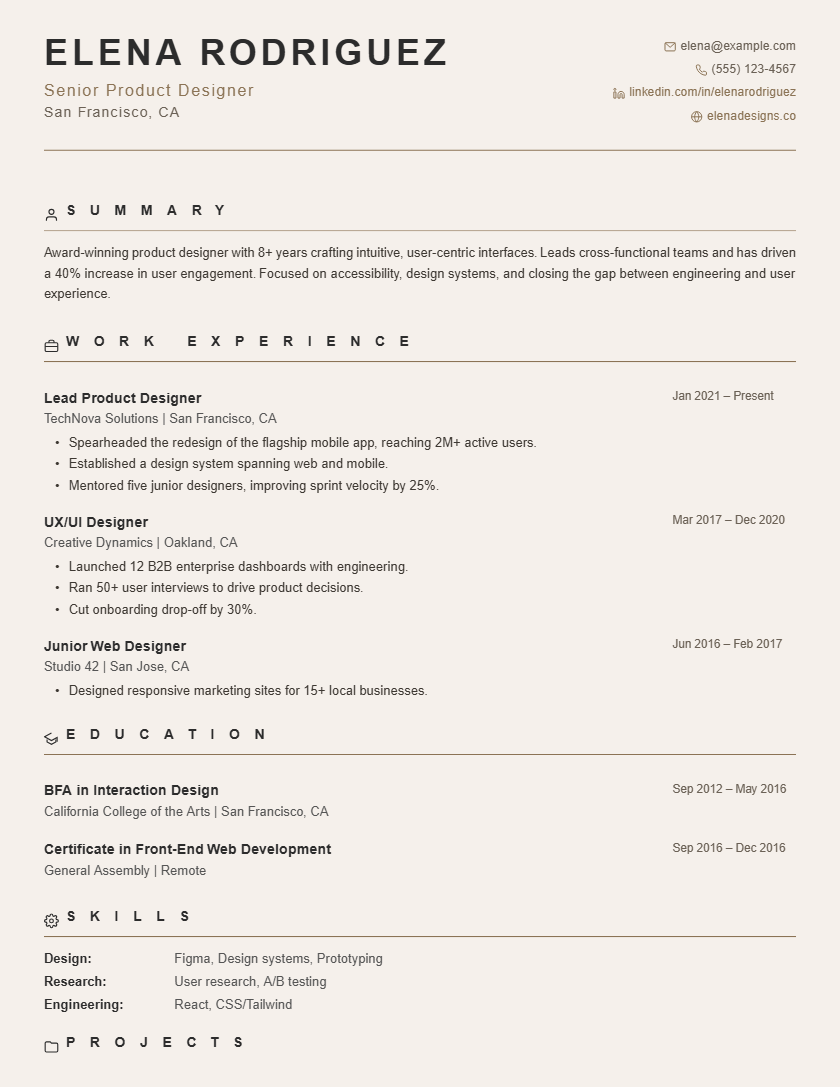
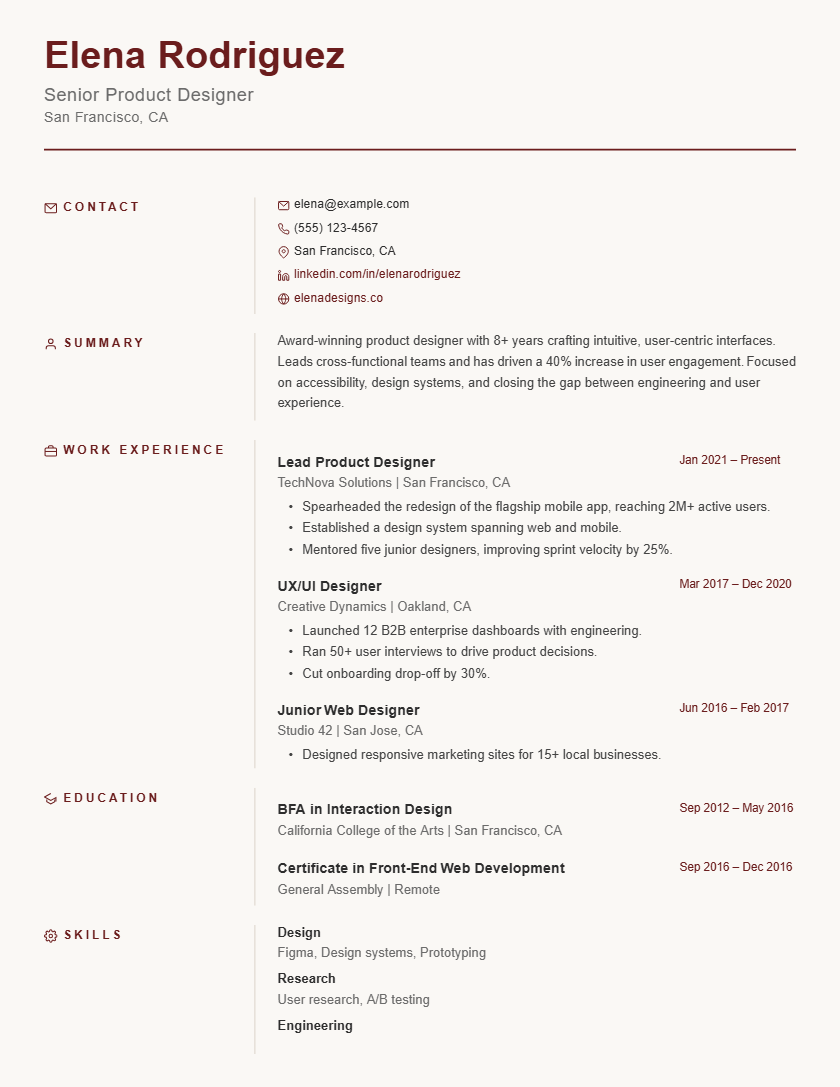
One page, reverse-chronological order and standard section headings, with every figure written as text. Analysts put education first with the GPA; associates and above put it last. Give each deal a type, sector and size, and keep unannounced clients anonymous. List FINRA licenses in a certifications section with the year. This example uses Executive Classic. The same content works in Standard, Warm Classic and Maroon Elegant.

Shown above: Executive Classic

  • Standard template
    StandardFree
  • Warm Classic template
    Warm Classic
  • Maroon Elegant template
    Maroon Elegant

09Questions investment banking analysts ask

How should I list deals on an investment banking resume?

Pick two or three deals and give each the type, sector and approximate size, such as the $520M sale of an engineered components maker to a strategic buyer. Then say what you did: the models you built, the documents you drafted, the stages you ran. Keep unannounced clients anonymous. Expect an interviewer to ask about every deal you list, so list only the ones you can explain.

Do I need the Series 79 before applying?

Usually not. FINRA's Series 79 requires sponsorship by a member firm, so most analysts take it after they are hired, together with the SIE and often the Series 63. Some postings ask for them soon after the start date. If you already hold the SIE, which anyone can take, list it, because it shows initiative and saves the bank a step.

Should education go first on an analyst resume?

For new analysts, yes. Banks recruit analysts largely from campus, so education, GPA and relevant coursework belong at the top, followed by internships and deals. Some postings set GPA floors, such as 3.5 or 3.7. Once you have two or three years of deals, move education to the bottom of the page and let your closed transactions lead.

How do I show deal impact without overstating my role?

Describe your work and who used it, not the outcome you did not control. An analyst who built the model used in a board presentation should say that, rather than claiming the model set the price. Give counts that are yours, such as pitch books built, buyers contacted or diligence requests handled, and let the deal size and outcome show the scale.

Is AI changing the investment banking analyst role?

Banks are using AI tools, and in 2026 some were reported to be cutting junior analyst classes. Models and decks are still described as a necessary way for juniors to learn, and the work of running processes, handling diligence and answering clients remains. On a resume, show judgment and process work, not only page production, because that is the part of the job least likely to be automated.

How do I move from accounting or consulting into investment banking?

Lead with the transaction-related work you have done: due diligence, valuation, quality-of-earnings reviews or financial modeling. Name the deal types and sizes you supported. Postings for lateral analysts ask for experience in M&A, corporate finance, equity research or related fields, so frame your current work in those terms. Taking the SIE before you apply also shows commitment to the move.

Free to start

Build your investment banking analyst resume

No card, no trial that turns into a charge.

Sign up free