Hospitality & food service resume examples
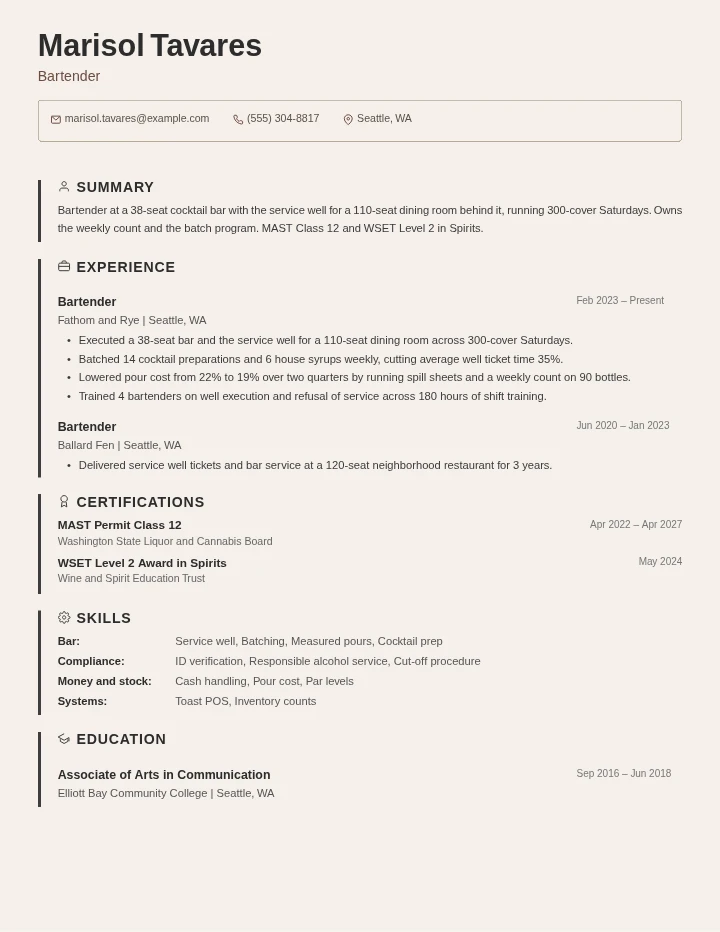
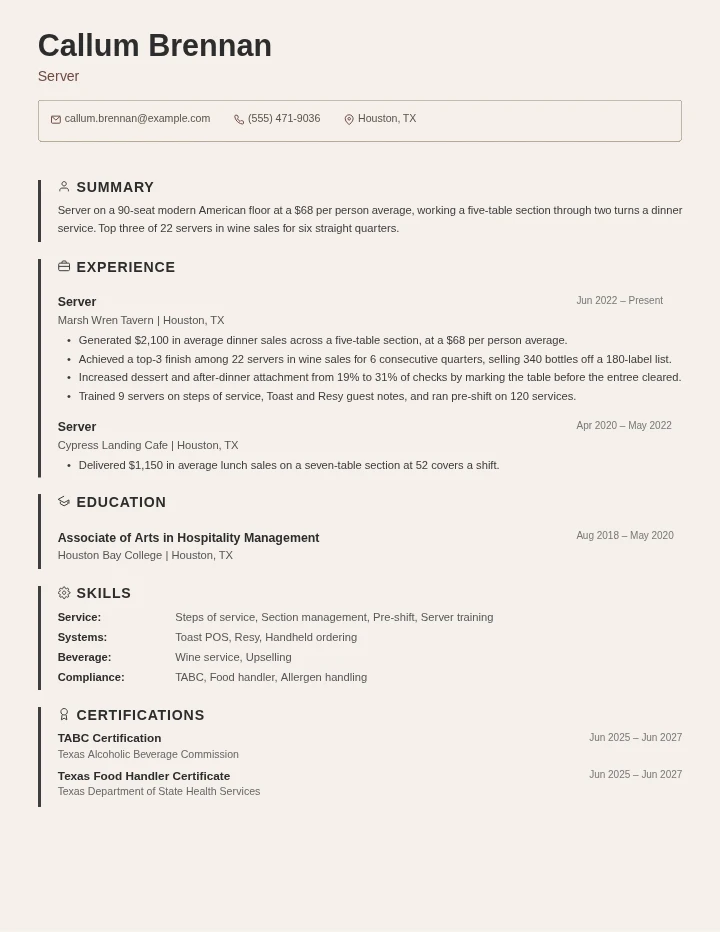
Hospitality resumes are read by people who run rooms and kitchens, and they think in covers, seats, check averages and staff counts. Give them those numbers in every role: covers per shift, the seat count of the restaurant, the number of rooms in the hotel, the size of the team you worked with or led, the check average, the events you ran and their sizes. A general manager who sees a server did 200 covers a night in a 140-seat dining room knows the pace you can hold.
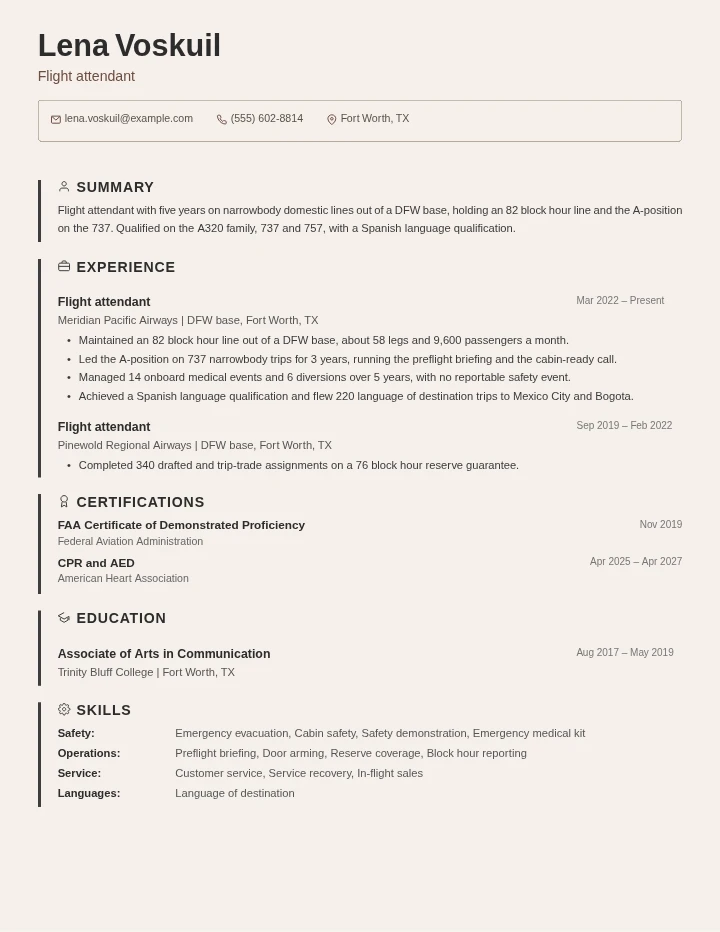
Kitchens and front desks cannot schedule you without the cards, so they go near the top: ServSafe or a state food handler card, an alcohol service certification, allergen training, and for hotel roles the brand standards you have worked under. So do the systems: the point-of-sale system in the restaurant, the reservation platform, the property management system at the front desk, the scheduling tool. A candidate who knows the same POS the venue runs starts on the floor a week earlier.
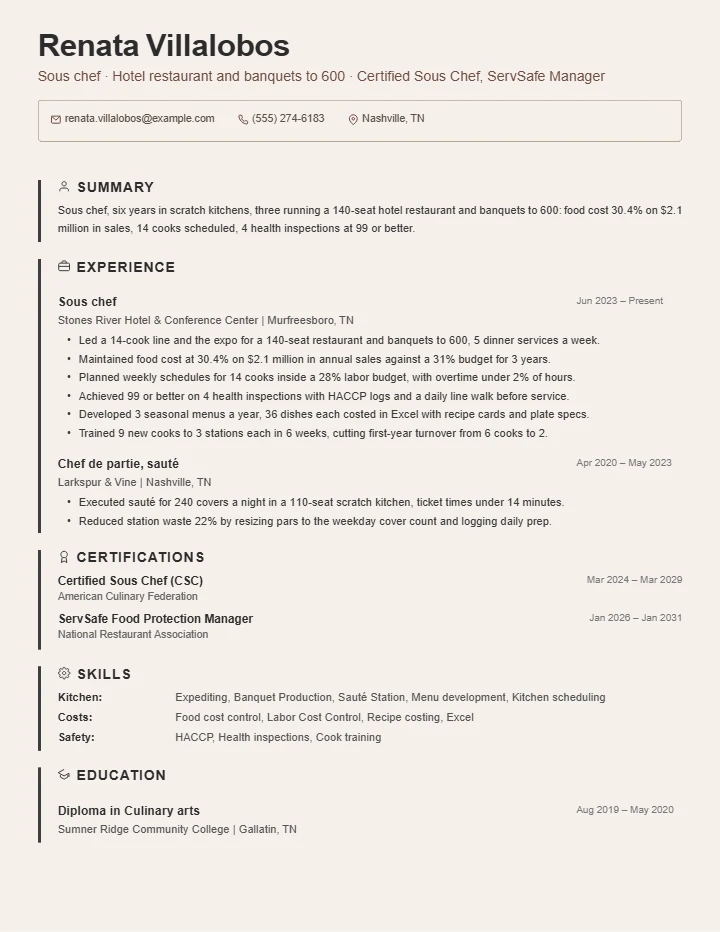
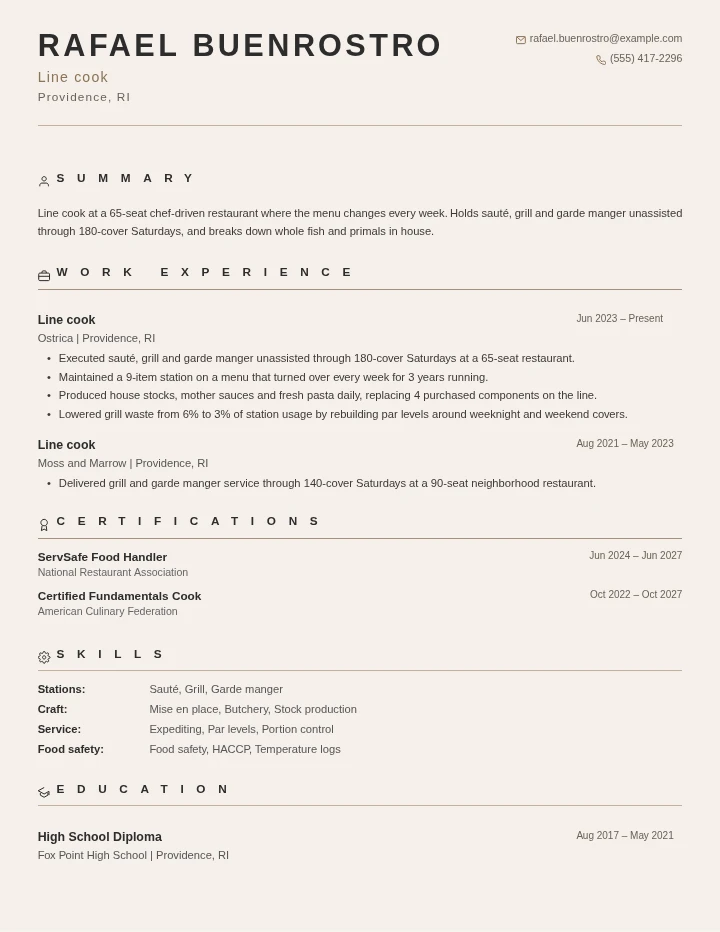
Results in this industry are money, ratings and inspections. Upsell rates, wine sales, check averages raised, tip percentages where the venue tracks them, food cost and labor cost held to a target, health inspection scores, review scores and rankings, occupancy and average daily rate for hotel roles, and events delivered on budget. For cooks and chefs, add the menu items developed, the station you ran, the cuisine and the service style, because those are the words a chef reads first.
One page, with availability stated for hourly roles and a summary of two or three lines under your name: the service style and the years, the venue size in covers or rooms, and one number such as a check average or an occupancy rate. A cook's headline names the cuisine and the station. A front-desk headline names the property size and the brand. Keep the formatting plain, list the certifications where they can be checked at a glance, and leave out the line about loving people. Everyone in this industry loves people. The numbers are what set you apart.
6 titles
Questions about hospitality & food service resumes
What goes in the first bullet of a server or bartender resume?
The pace and the money: covers per shift, seat count, check average, upsell results. Name the POS and the reservation system in the same bullet or the next one. Add the alcohol service and food handler certifications with dates. Managers read hundreds of resumes that say friendly and hardworking. They read very few that say 200 covers a night and a 14% wine attachment rate.
What should a chef or line cook include besides the restaurants?
The cuisine, the station, the volume, the menu items you developed, the food cost you held and the team you ran. Name the service style, whether fine dining, casual, banquet or quick service, and any competitions, stages or notable kitchens. A chef reads a cook's resume for the stations and the volume first.
Do hotel resumes need different details from restaurant resumes?
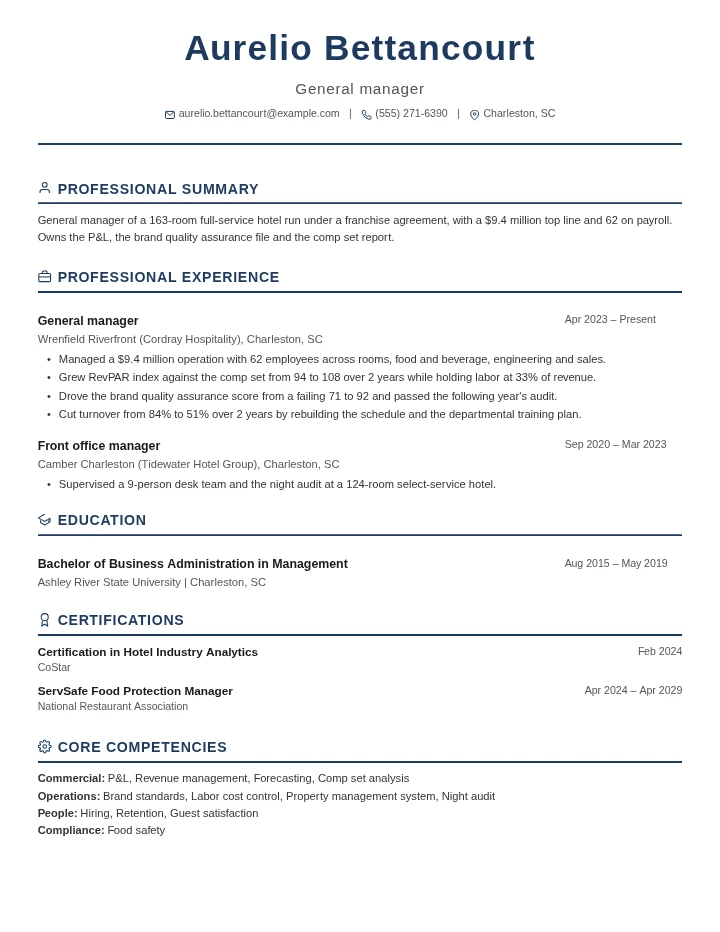
Yes. Hotel readers want the property size in rooms, the brand and its standards, the property management system, occupancy and rate results, guest satisfaction scores and the departments you have covered. Restaurant readers want covers, seats, check averages and the POS. If your experience spans both, keep each role in its own vocabulary.
Free to start
Build your resume
No card, no trial that turns into a charge.