Hotel manager resume examples & writing guide for 2026

Three hotel manager resumes at front office, general manager and lifestyle-hotel level, rendered in a real template and pulled apart line by line. Each one opens with rooms, flag, operator and top line, because nobody can size the job without them.

By the Resumi editorial teamUpdated 10 min read

Showing the mid-level example

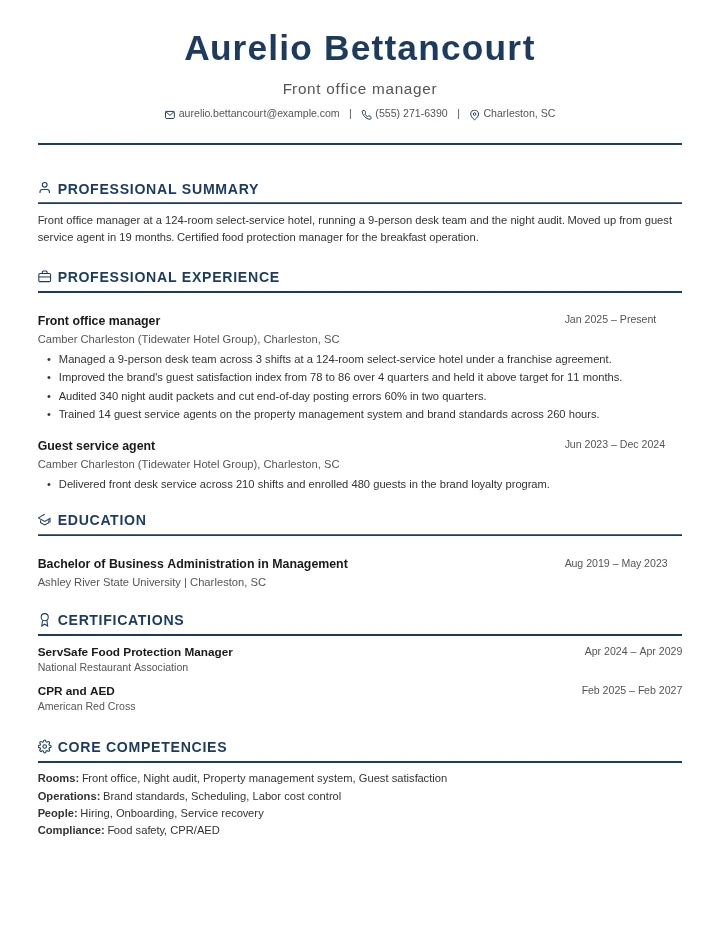
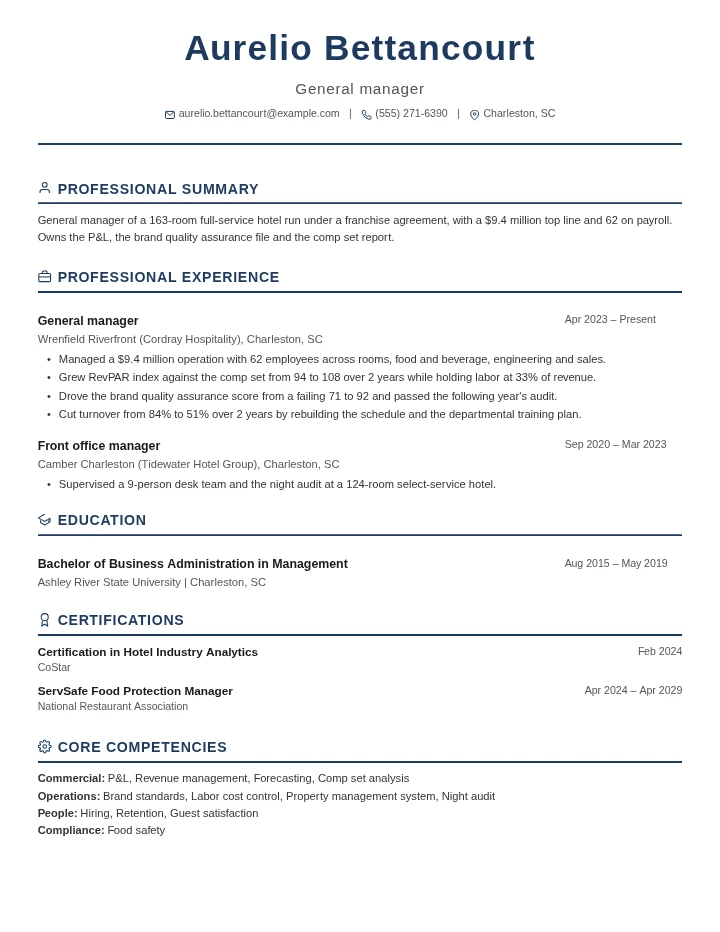
Hotel manager resume example, mid level, rendered in the Executive Classic template
Strength: Excellent

Written by the Resumi editorial team for a fictional candidate. Role facts come from O*NET and the U.S. Bureau of Labor Statistics.

Strength band is Resumi’s optimization score, not a ranking any employer sees.

What makes this resume work

Each marker on the page has a note here. Press a marker to jump to its note.

  1. 1

    Four facts before any result

    Rooms, service level, top line and headcount. An owner or asset manager reading a stack of these is sorting by the size of what someone has carried, and a resume without those four is unsortable.

  2. 2

    The three documents a manager owns

    The profit and loss account, the brand audit file and the comp set report. Naming them says the candidate has actually held the job rather than assisted in it, and every one is checkable in an interview.

  3. 3

    Index, not raw revenue

    Ninety-four to a hundred and eight against the comp set is a share claim, and share is what an owner buys. Raw revenue growth in a rising market proves nothing about the manager.

  4. 4

    Turnover, with the lever

    Eighty-four percent to fifty-one, by way of the schedule and the training plan. Hotel turnover is the cost an operator feels every week, and almost nobody puts a retention figure on the page.

  5. 5

    The analytics credential, named right

    Hotel industry analytics moved to a different organization in January 2024. Naming the current issuer rather than the old one is a small thing that tells an operator the candidate keeps up.

Build your hotel manager resume

Free to start · no card

01The example, in full

The resume shown above, as text you can search and copy.

Aurelio Bettancourt

General manager

Charleston, SCaurelio.bettancourt@example.com(555) 271-6390

Summary

General manager of a 163-room full-service hotel run under a franchise agreement, with a $9.4 million top line and 62 on payroll. Owns the P&L, the brand quality assurance file and the comp set report.

Experience

General manager

Apr 2023 – Present

Wrenfield Riverfront (Cordray Hospitality) · Charleston, SC

  • Managed a $9.4 million operation with 62 employees across rooms, food and beverage, engineering and sales.
  • Grew RevPAR index against the comp set from 94 to 108 over 2 years while holding labor at 33% of revenue.
  • Drove the brand quality assurance score from a failing 71 to 92 and passed the following year's audit.
  • Cut turnover from 84% to 51% over 2 years by rebuilding the schedule and the departmental training plan.

Front office manager

Sep 2020 – Mar 2023

Camber Charleston (Tidewater Hotel Group) · Charleston, SC

  • Supervised a 9-person desk team and the night audit at a 124-room select-service hotel.

Education

Bachelor of Business Administration in Management

Aug 2015 – May 2019

Ashley River State University · Charleston, SC

Skills

Commercial
P&L, Revenue management, Forecasting, Comp set analysis
Operations
Brand standards, Labor cost control, Property management system, Night audit
People
Hiring, Retention, Guest satisfaction
Compliance
Food safety

Certifications

Certification in Hotel Industry Analytics

Feb 2024

CoStar

ServSafe Food Protection Manager

Apr 2024

National Restaurant Association

02Market snapshot

Median pay
$69,250 median annual pay for lodging managers, or $33.29 an hour
Typical education
72 percent of respondents say a new hire needs a bachelor's degree
Job outlook
Projected to grow 4 percent from 2025 to 2035, with about 5,500 openings a year
Common credentials
No state licenses a person to manage a hotel, only the property or the business itself

Sources: BLS OOH (2026) · O*NET (2026) · CareerOneStop (2026)

03The same resume at three levels

The tinted row is the level shown above.

  • Entry-level

    0–2 years

    The first rung is not general manager, and pretending otherwise wastes the page. Front office manager is a named title in the federal occupation, so the case here is the desk team, the audit and a guest satisfaction score with a scale attached. Room count, segment and the franchise arrangement lead every role from the start.

    Typical titles: Front office manager, Guest service manager, Night manager

  • Mid-level

    3–6 years

    This is the level where the numbers have to be commercial rather than operational. One share figure, one cost figure and one people figure, each with the lever that moved it, and each traceable to a document the property already produces. Growth alone in a rising market proves nothing. An audit recovered from failing beats one that never slipped.

    Typical titles: General manager, Hotel manager, Assistant general manager

  • Senior

    7+ years

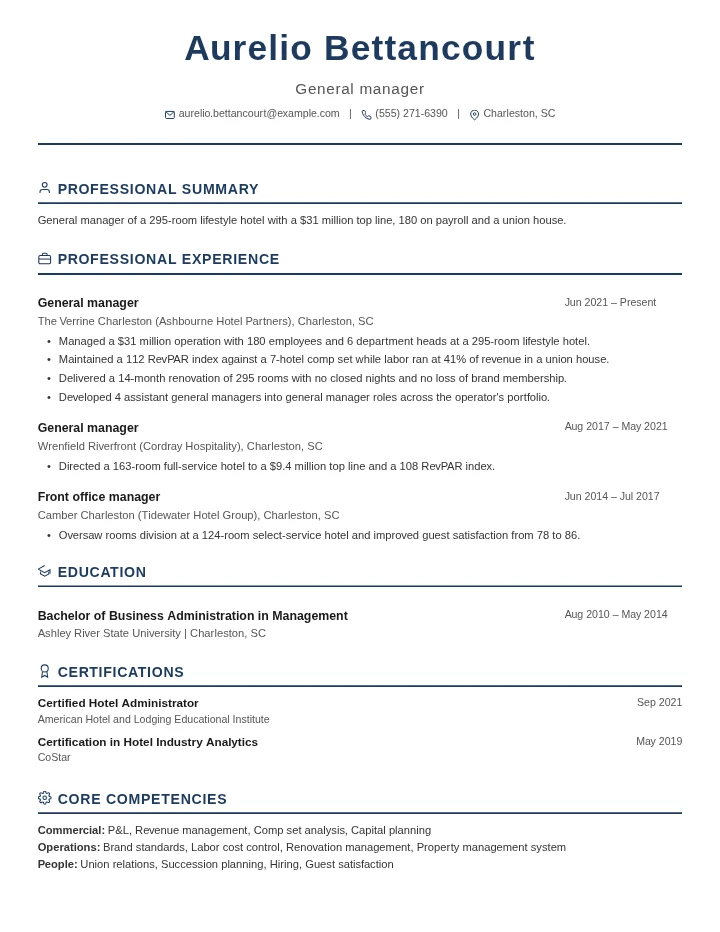
    At this level the reader is an owner or an asset manager, not a recruiter. So the page spends itself on the four scarce things: a union house, a renovation delivered without closing, share held while carrying higher labor, and a bench of managers who moved up. The two earlier hotels keep one line each.

    Typical titles: General manager, Area general manager, Director of operations

04Summary

Weak

Passionate hospitality professional with extensive experience leading hotel operations and a proven track record of delivering exceptional guest experiences and driving results in a fast-paced environment.

Strong

General manager of a 163-room full-service hotel run under a franchise agreement, with a $9.4 million top line and 62 on payroll. Owns the P&L, the brand quality assurance file and the comp set report.

Rooms, service level, ownership structure, revenue, headcount and the three documents the job actually owns. An asset manager can size this property against their own before reading a single result. The weak version could describe a front desk supervisor or a regional director, and extensive experience is not a number.

05Bullets

Weak

  • Responsible for overseeing all aspects of daily hotel operations including guest services, housekeeping, maintenance and staff supervision to ensure high standards.

Strong

  • Grew RevPAR index against the comp set from 94 to 108 over 2 years while holding labor at 33% of revenue.

A share figure and a cost figure that constrain each other, both traceable to documents the property already produces. Revenue can rise because the whole market rose. Index rising means you took share from the hotels next door. The weak bullet lists the departments on an organization chart, which the job title above it already implied.

06Skills and keywords

Commercial

  • Revenue Management (in the example)
  • RevPAR (in the example)
  • P&L Management (in the example)
  • Yield Management

Operations

  • Brand Standards (in the example)
  • Labor Cost Control (in the example)
  • Night Audit (in the example)

Systems

  • Property Management System (in the example)
  • HotSOS
  • Group Sales

Credentials

  • Certification in Hotel Industry Analytics (in the example)
  • ServSafe Food Protection Manager (in the example)
  • Certified Hotel Administrator

Filled chips appear in the example above.

Paste a job description and Resumi shows which of these your resume already covers.

Build your hotel manager resume

07Mistakes to avoid

  1. No room count anywhere on the page

    Fix: Rooms are the single most load-bearing number in this job. Across twenty live postings read for this page the properties ran from 60 rooms to 299, and pay ran from 65,000 dollars to 285,000. Lead every role with rooms, flag, segment, team size and top line.

  2. Writing as though the brand employs you

    Fix: Most branded hotels are run by a management company for a third-party owner, and the industry body puts 57 percent of US hotels under franchise. Your employer line is the operator, your flag is the brand, and getting that wrong is an immediate tell.

  3. Guest satisfaction with no scale and no name

    Fix: Every brand measures it differently and none of them publish a distribution, so a bare percentage means nothing. Use the name your brand uses, give the scale, give the before and after, and give the period. An unnamed score reads as a number you made up.

  4. Revenue growth instead of share

    Fix: Revenue rising in a rising market proves nothing about the manager. Your index against the comp set does, because it compares you with the hotels competing for the same guest. Pull it off your own report and give the direction you moved it.

  5. Listing credentials that no longer exist

    Fix: The lodging credential catalog has shrunk and public certification directories have not caught up, so several designations still recommended online cannot be bought today. Check that yours is still sold before you list it, and name the body that issues it now rather than the one that used to.

08Format and template

History first, then education, then certifications, then a short skills block. An owner reads the properties and sizes you by rooms and top line, so nothing should push that down the page. A degree earns its place higher here than in most hospitality roles, because the federal occupation sits in a job zone that expects one. Head the resume with the exact title the posting uses, because hotel manager and general manager are not synonyms at a full-service property. This example uses Executive Classic. The same content works in Standard, Beige Border and Warm Classic.

Shown above: Executive Classic

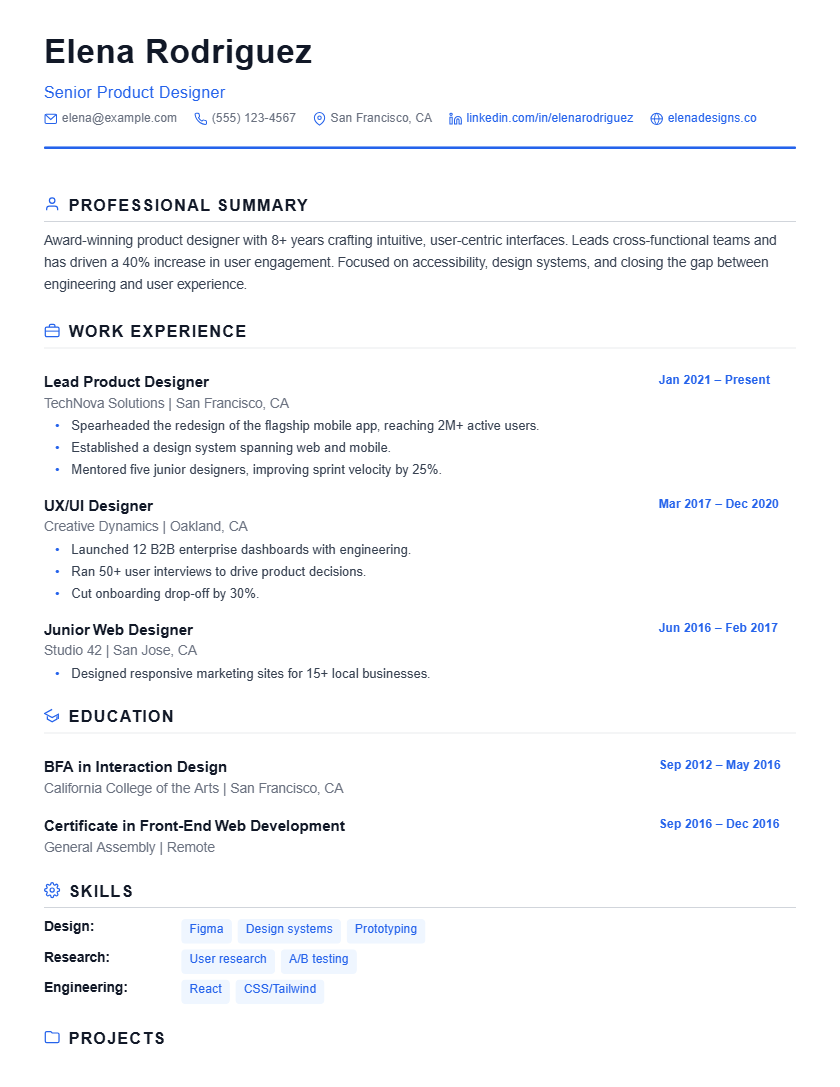
  • Standard template
    StandardFree
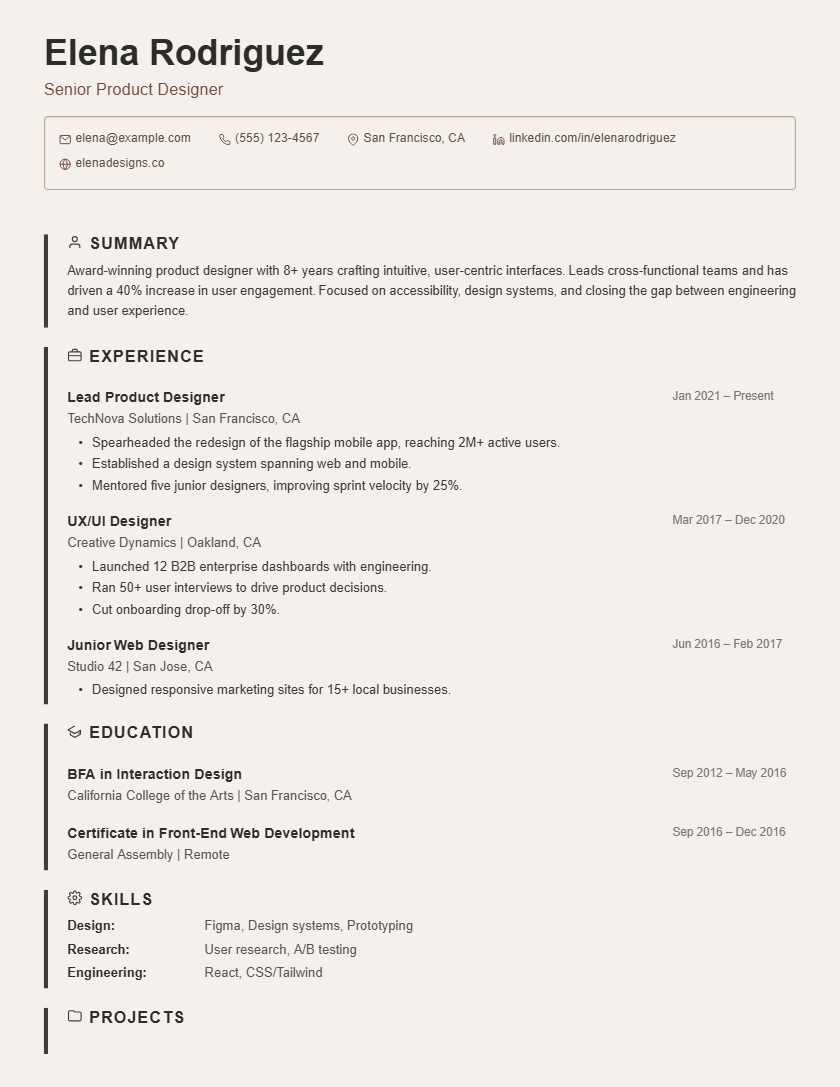
  • Beige Border template
    Beige Border
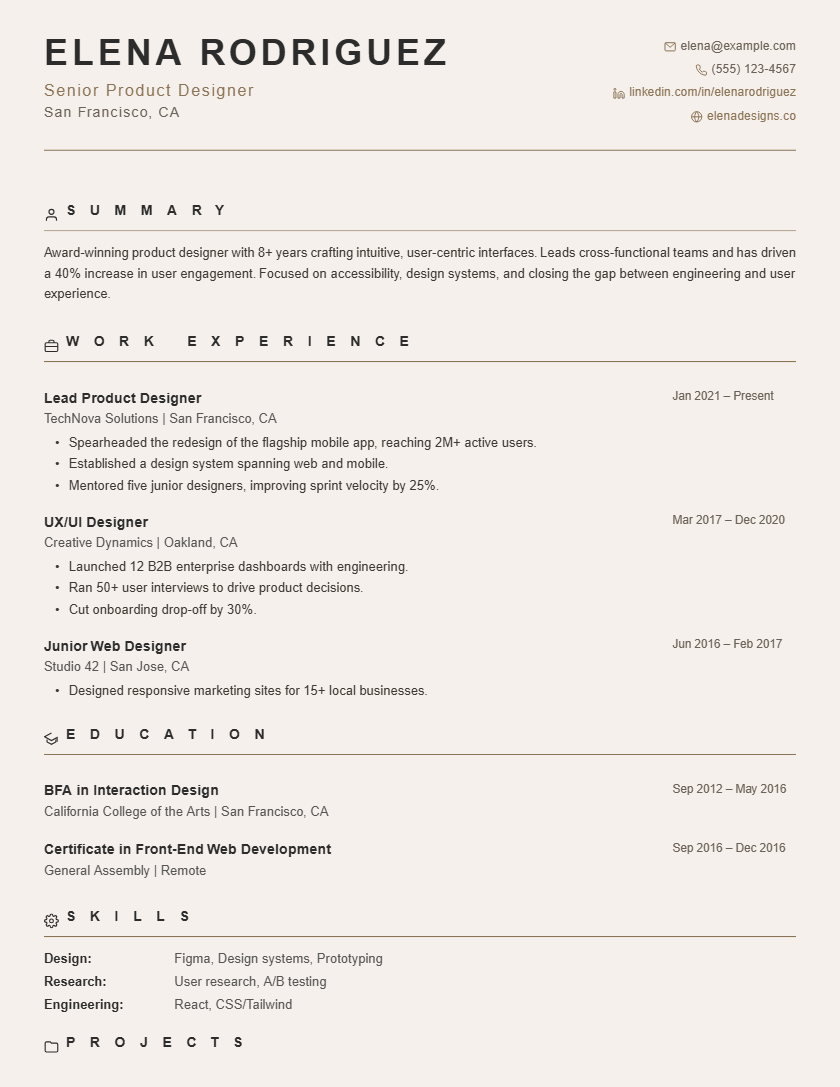
  • Warm Classic template
    Warm Classic

09Questions hotel managers ask

Do I need a degree, or not? The official sources say different things.

They genuinely disagree, and it is worth knowing why. The federal handbook lists typical entry-level education as a high school diploma with no on-the-job training. The occupational database puts the same job in a preparation zone that expects a four-year degree, and reports 72 percent of respondents saying a new hire needs a bachelor's. The postings split the difference: some require a degree outright, some publish a substitution table trading years of experience for it, and some ask for no degree at all. If you have one, list it high. If you do not, lead with room counts and a P&L instead.

Who do I put as my employer, the brand or the management company?

Both, in that order of usefulness. Almost nobody applying for these jobs is applying to the brand. The industry body reports that 57 percent of US hotels are franchised, and across twenty live postings read for this page, every single employer was a management company operating a branded property rather than the brand itself. Write the flag and the operator together, so a reader sees the standard you were audited against and the company that actually paid you. If the owner is relevant, such as a private equity holder or a REIT, that is a third useful fact.

Which hotel certifications are still worth listing?

Fewer than the internet thinks. The main body's current catalogue is much smaller than the one public certification directories still publish, so several designations that resume advice recommends cannot actually be bought today. The administrator credential aimed at general managers is still sold and still means something. The hotel industry analytics certification moved to a different organization in January 2024, so name the current one. Beyond those, the credentials that show up in real postings are practical rather than prestigious: a food protection manager certificate, alcohol service, and first aid.

Is this a growing field? Everything I read says hospitality is booming.

Not by headcount, and the distinction matters for how you write. The handbook projects 4 percent growth from 2025 to 2035, which is an increase of only 2,100 jobs over the whole decade, against roughly 5,500 openings a year. Almost every opening you will apply for exists because somebody left, not because a new seat appeared. That is why turnaround evidence, retention figures and audit recoveries convert: you are being measured against the person who vacated the job, and the owner wants to know you will not do the same.

I run a small property. How do I compete with people managing 300 rooms?

By being exact about what small actually means in your case, and by using the numbers that scale down well. Ownership of the full profit and loss account at 60 rooms is real ownership, and at many large hotels a general manager shares it with a regional team. Say how many departments report to you, whether you carry the sales function yourself, whether you cover the desk, and what your index did. Also say if you are an owner-operator: about a fifth of people in this occupation are self-employed, and that is a different job, not a smaller one.

How do I show I am ready for a bigger property?

Show the parts of the bigger job you already do. A renovation delivered while trading, a union house, a pre-opening or a ramp-up, a distressed asset brought back, a brand audit recovered from failing, and assistant managers you developed who took their own properties. Those are the scarce things, and they are what an operator is short of. Room count alone will not carry you up a tier, but a property of any size that you fixed will, because the next owner is buying the fixing rather than the size.

Free to start

Build your hotel manager resume

No card, no trial that turns into a charge.

Sign up free