Logistics & transportation resume examples
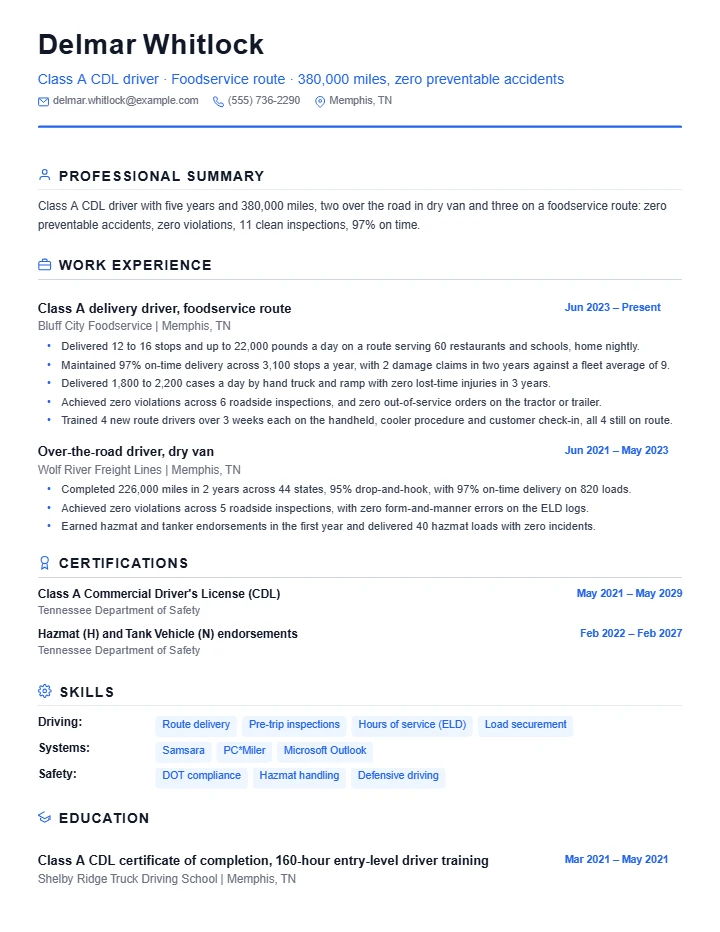
Logistics resumes are read by people responsible for safety and throughput, and they want the compliance facts before the story. For drivers, that means the license class, the endorsements, the years of a clean motor vehicle record, the equipment driven, the freight types, the miles and the routes, and the electronic logging and inspection history. For warehouse and distribution roles, it means the certifications for the equipment you operate, the safety record, and the shifts and volumes you have worked. These items go near the top because they are the first filter.
Numbers in this industry are throughput and accuracy. Units picked per hour. Order accuracy. On-time delivery rate. Inventory accuracy after a count. Dock-to-stock time. Damage rates. Loads per week. Miles per month. For planners and analysts, freight spend, carrier rates negotiated, on-time-in-full performance, lead times reduced and inventory turns improved. Name the systems these numbers came from: the warehouse management system, the transportation management system, the fleet software, the scanning hardware. State the shift and the season as well, because peak-season rates on a night shift say more than the same rates in a quiet week.
Reliability shows in the details a dispatcher or a shift lead checks. Attendance and perfect-attendance awards. Safety awards and incident-free periods. Cross-training on multiple equipment types. Leading a shift or a crew and its size. Employment dates without unexplained gaps, because this industry asks about them and a short honest explanation on the resume saves the question. Seasonal and contract work is normal. Label it as such.
One plain page: licenses and certifications in their own section directly under the header, equipment and systems in a skills block, and bullets written in the units above. The summary is two lines, the license class and the years on one and the equipment and a throughput number on the other. Nothing on the page should slow down a reader who is checking whether you are qualified to start on Monday.
1 title
Questions about logistics & transportation resumes
What does a truck driver resume need that other resumes do not?
The license class and endorsements, the years of a clean driving record, the equipment (dry van, reefer, flatbed, tanker), the freight and the routes, average miles, the electronic logging system used and the inspection history. Carriers screen on these before anything else, and a resume that lists them in one section at the top gets read.
How do I show results in a warehouse job?
With the numbers the floor tracks: units per hour against the standard, order accuracy, safety record, inventory count accuracy, and the equipment you are certified on. If you trained others, led a shift or covered multiple zones, state the counts. Rates on a resume tell a shift lead you knew your own numbers against the standard, which is what the floor rewards.
Do supply chain analyst resumes belong in this industry or in data?
In this industry, with the data skills inside the bullets. Report freight spend managed, carrier savings negotiated, on-time-in-full performance, lead times and inventory turns, and name the transportation and warehouse systems the data came from. Add the analysis tools, such as SQL, Excel and a BI platform, in the skills block.
Free to start
Build your resume
No card, no trial that turns into a charge.